Camera That Lied
Key art
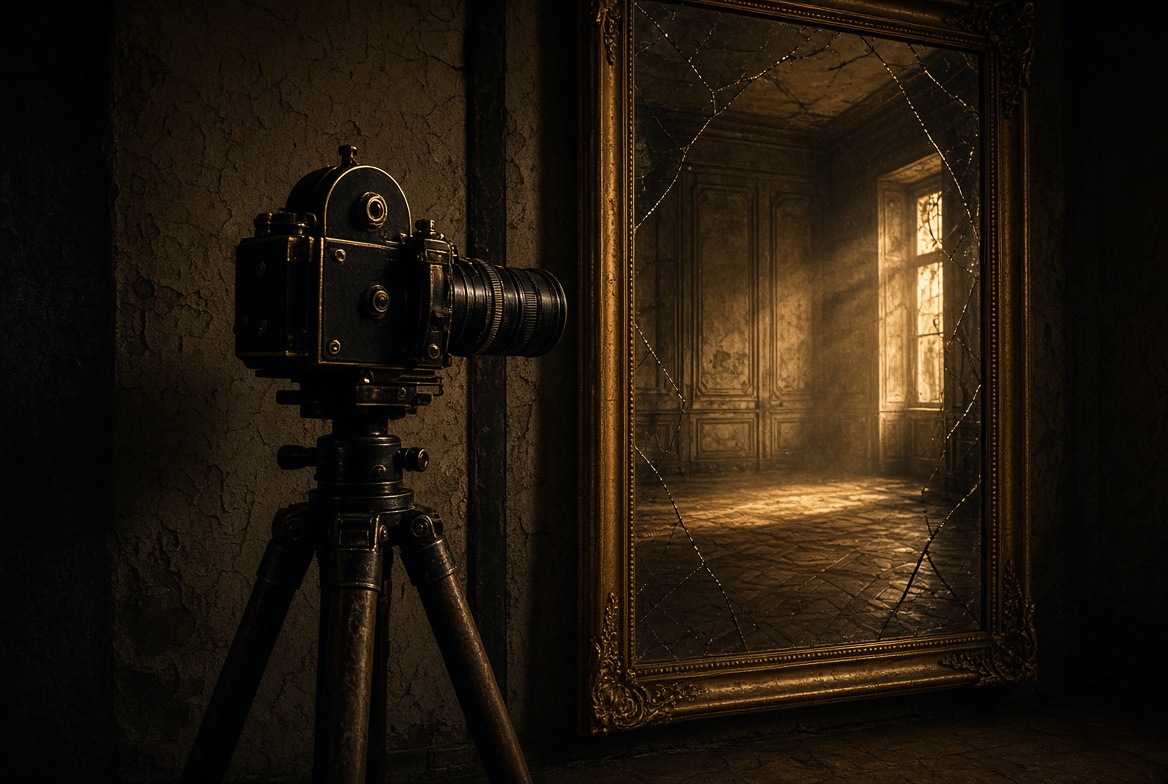
The screening
The picture is filed as Camera That Lied.
Scenario
2:57 · 16:9
Jules Kennett maintains the recorder the way another man maintains a lock. Tapes are labeled by hour, spines out, the latest one threaded. The room itself is plain: one door, shut; one table; one window with the blind down. He has just serviced the transport, oiled what needs oil, and proved the heads clean. A cloth with a dark smear of old oxide lies folded at the edge of the table. The machine is telling the truth about its own health. Its reels sit square. Its hum is even. He wipes his fingers and leaves no oil on the latch when he tests it. The latch is down. The room agrees with itself.
He plays the latest tape back on a small screen. On the screen the same room appears, and the door in it stands open. Day from somewhere else lies on the pictured floor. Jules turns to the actual door. It is shut. The latch is down. The seam is dark. He puts a palm to the wood and feels it solid. He opens the blind. Real daylight enters as a hard stripe and stops at the table leg. The window on the screen shows daylight the blind was refusing a moment ago, and it shows that daylight even now as a full wash, not a stripe. He stops the playback. The screen holds the open door as a still. He checks the cable, checks the housing, seats a plug that was already seated, and starts the tape again. The serviced machine repeats the lie without a stutter. The room denies it by remaining what it is. The hum does not change pitch to confess anything.
He does not confess a trick, because the trick is not his. He sets the housing back on. Screws turn down and stop. He leaves the tape threaded. The screen keeps its open door. His hand rests on the shut latch, the metal cold, the bar seated. Both versions continue, and only one of them is the room. The real blind stays up. The stripe of day on the floor does not match the wash on the screen. Time passes as the reels turn and the pictured door does not swing. Oxide smell stays faint and ordinary.
The cloth with the oxide smear stays folded. He does not use it on the screen, because the screen is not dirty. The lie is in the playback, not on the glass. The hour label on the tape spine remains the hour he wrote, and the room's plainness does not revise it.
On the screen the blind, which had been absent, rises into the picture on its own and stops halfway, while the real blind is already fully up. The pictured door remains open under that half covering. The actual latch under his hand does not lift. He does not correct the tape. He does not lower the real blind to force the two to agree. On the small screen a door stands open that the actual door, shut under his hand, keeps refusing.
Shooting script
Scene 1. Machine room. Day. 2:57. 16:9.
One place. One hour. It stays one scene.
Jules Kennett, 51, plays back a serviced hour-tape on a small screen, and the screen keeps a door open while the real door under his hand stays shut.
No dialogue.
Breakdown
Day hour for a threaded tape, a shut latch, and a blind.
Cast. Jules Kennett, 51. Work shirt. Alone. Hands wiped clean of oil before they touch the latch.
Recorder. Tapes marked by slot, edges out, the newest threaded. Transport just serviced, heads clean, reels square, hum even. Housing screws down and stops. The tape stays threaded.
Screen. A small screen. Playback shows this room with the door open and a full wash of day. Stopped, it holds that open door. Started again, the lie repeats without a stutter. Later the pictured blind rises by itself and halts at mid-travel, the pictured door still open.
Real door. One door, shut, latch down, seam dark. The wood is solid under his palm. The latch stays cold and seated. It never lifts.
Blind and cloth. A window blind he opens. Real day enters as a hard band and halts at the bench leg. The real blind stays fully up. A folded cloth at the table edge carries a dark smudge of old residue and is never used on the screen.
Shot list
Camera. One scene. 16:9.
Nobody looks into the lens. The sizes below are the decoupage, not the literary script.
1 · 0:00–0:12 · Wide. A plain machine room holds one shut door, one table, and a window with the blind down, tapes labeled by hour.
2 · 0:12–0:24 · Medium. Jules finishes the service, reels square, and wipes his fingers before he tests the latch.
3 · 0:24–0:36 · Close. The latch is down, and his palm finds the wood solid.
4 · 0:36–0:48 · Medium. On the small screen the same room appears with the door standing open.
5 · 0:48–1:00 · Wide. He turns to the actual door, still shut, seam dark.
6 · 1:00–1:12 · Close. He opens the blind, and real day enters as a hard stripe that stops at the table leg.
7 · 1:12–1:24 · Medium. The screen keeps a full wash of day where the blind had been refusing it.
8 · 1:24–1:35 · Close. He stops the playback, and the monitor freezes an open doorway as a still.
9 · 1:35–1:47 · Macro. He tests the lead, tests the case, and sets a connector that was already home.
10 · 1:47–1:59 · Medium. The tape starts again and repeats the open door without a stutter, hum unchanged.
11 · 1:59–2:10 · Close. Screws turn down, the housing is back, and his hand rests on the cold seated latch.
12 · 2:10–2:22 · Wide. The real blind stays fully up, the floor stripe refusing to equal the flood on the monitor.
13 · 2:22–2:34 · Medium. The oxide cloth stays folded, unused on the glass, and the hour on the tape spine stays the hour he wrote.
14 · 2:34–2:45 · Close. On the screen the blind rises by itself and halts at mid-travel, while the true shade is already all the way up.
15 · 2:45–2:57 · Macro. The real bar under his palm stays down, and the pictured door remains open.
Lookbook
Hard day stripe indoors.
The room's own day is a hard stripe once the blind is up, stopping at the table leg. The screen shows a full wash and an open door, brighter and more complete than the stripe. The machine hums evenly in that mismatch. The latch under his hand stays cold metal, unlit by the picture.
Palette
Room wall. #D9D3C8. Plain day walls of the machine room
Day stripe. #F6E7C4. Hard light from the raised blind to the table leg
Screen wash. #F8F4E4. Full day inside the playback
Open-door picture. #C8D4DE. The door standing open on the screen
Shut seam. #2A2622. The dark seam of the real shut door
Latch metal. #6A7074. Cold bar seated under his hand
Oxide smear. #5A3828. Old dark smear on the folded cloth
Tape spine. #E6D2A0. Hour label he already wrote
Lens
Wide holds the plain room, the real door, and the table. Close holds the latch, the plug, the stripe at the table leg, and the screen's open door. The picture stays a picture inside this same room.
Costume
A work shirt cleared of oil.
Jules Kennett is 51, in a plain work shirt with the sleeves able to take oil and then be wiped clear. No uniform patch is required.
He cleans his digits and puts no grease on the bar. The cuffs stay clean after that wipe. The oxide smear belongs to the folded cloth, not to the shirt. The clothes are the same at the last still as at the first screw.
Design
Threaded deck, shut door, half blind on a screen.
One plain room: shut door, table, window, blind, recorder with hour-labeled tapes, the latest tape threaded. A folded cloth with old oxide sits at the table edge. Cable and plug are seated.
The screen must show this room with the door open and a full day wash, hold that still, repeat it cleanly, then raise a pictured blind only mid-travel while the true shade is fully up. The real latch stays down. The stripe of day stops at the table leg. He never lowers the real blind to force a match.
Makeup and hair
Clean fingers on a cold latch.
Jules is 51. Skin is work skin, a little oil possible before the wipe, none left on the latch. Hair is practical and out of the reels. The face checks door, blind, cable, housing, and stays untheatrical.
The hand rests on cold metal. No cut, no oxide on the cheek. The lie is on the screen, so the body stays ordinary and solid against a solid door.
Sound
No score. An even hum, screws, a seated latch.
Hum. Even machine tone from the start. It never changes pitch to confess.
Reels. A soft turn when the tape runs, and the same turn when the lie repeats.
Latch. A test, metal cold, bar seated. Later the hand rests there and the bar never lifts.
Blind. The real blind going up, a short mechanical travel, then silence. The pictured blind's rise is silent too.
Plug. A seat of a connector that was already home. No spark, no new hum.
Screws. Housing screws turning down and stopping.
Cloth. The oxide cloth is never shaken out. It adds no sound.