Crown of Fog
Key art
The screening
The picture is filed as Crown of Fog.
Scenario
2:57 · 16:9
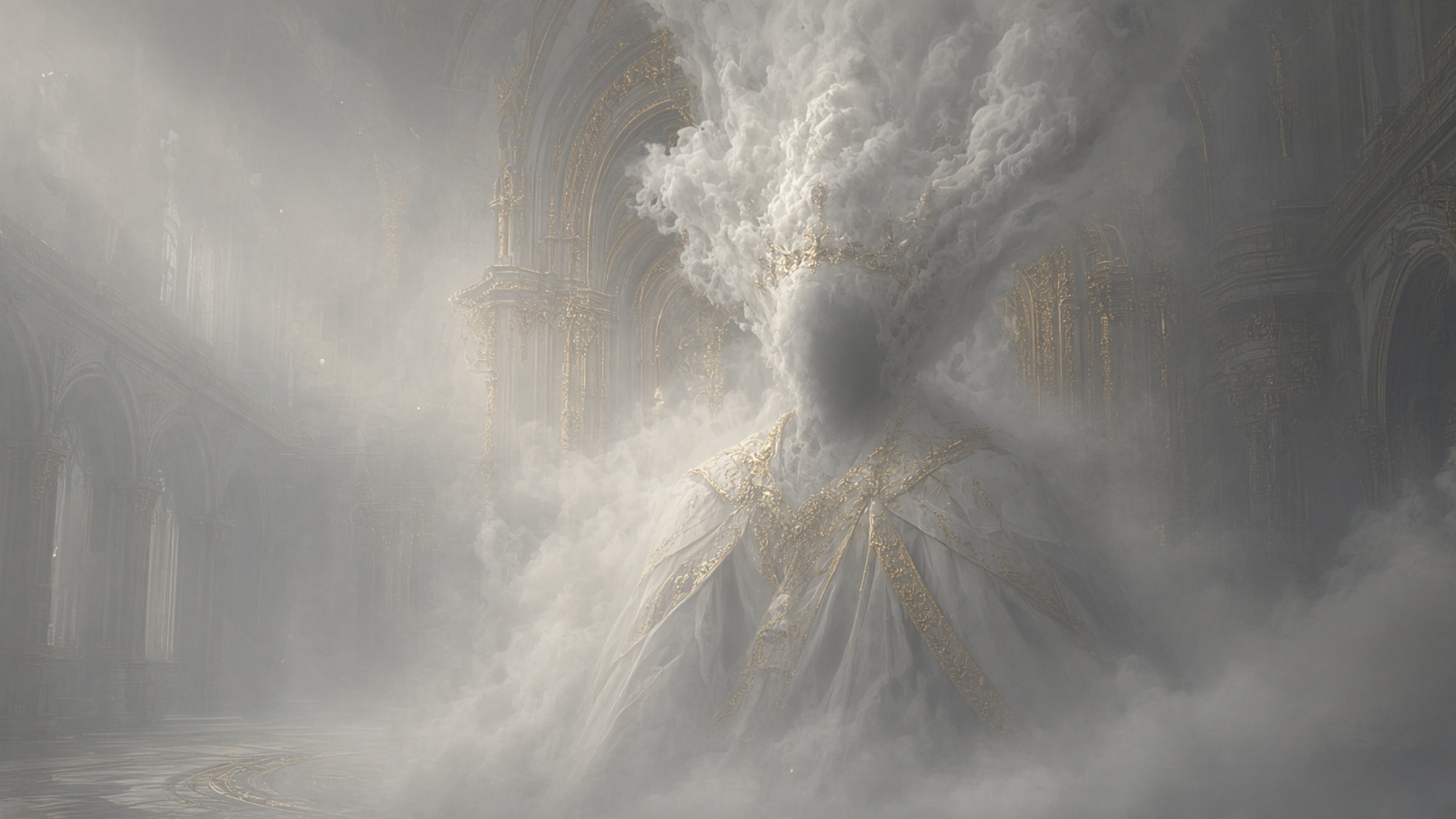
A figure stands on a balcony with a crown of fog where a face should be. The mist holds a head's shape and refuses every feature. No eye resolves. No mouth opens. Below, subjects in work clothes face the silhouette. They bow when it turns, not because a mouth gave an order, but because the outline is what rule has become. Tools stay in their hands, idle. A clerk with a slate waits for a decision about the gate. The chalk on the slate is fresh. The gate itself is iron and clear, swung open on its hinge, a gap a cart could use.
The figure lifts one hand. The edge of the sleeve is soft, and that softness reaches the courtyard as a pressure, a change in the air that moves hems and does not become wind. The gate begins to close. No one can name a nod. The iron travels slowly, sure of the latch it has not met. The clerk writes a line, hesitates, and cannot name who decided. The chalk stops mid-word. He looks up. The fog shifts. For a moment a profile almost forms, a nose, a brow, then frays, and the almost-face is worse than none. The subjects who had begun to lift their eyes bow again. The gate meets the latch with a hard sound that the soft crown somehow sharpened.
A woman near the gate puts her palm on the iron, asking with the gesture to keep it open a little longer. The metal is cold. Her fingers spread. The silhouette does not answer in words. The lifted hand on the balcony does not wave her off and does not invite her through. The latch drops the rest of the way. She takes her hand back. A print of warmth fades on the iron. The subjects remain bowed to a ruler they could not pick out of a line of people.
Dust lifted by the closing gate settles back onto the steps in a thin skin. The woman's cooled palm print is gone. A work cloth hanging on a peg turns once and hangs straight. No one crosses the shut iron. The balcony figure's sleeve lowers at last, the softness going out of the courtyard air, and the bows do not rise with it.
The fog crown holds its shape without a face. Time passes as the hard sound of the latch leaves the stone and the courtyard stays quiet enough to hear a rope somewhere tapping. The line on the clerk's slate, unfinished, loses its last chalk stroke to a smear of his own cuff, so the record of the order is shorter than the order was. He does not rewrite it. The closed gate shows no seam a hand could use. The courtyard stays bowed a moment longer than courtesy requires, and the fog on the balcony keeps the shape of a head that will not become a person.
Shooting script
Scene 1. Courtyard gate. Day. 2:57. 16:9.
One place. One hour. It stays one scene.
A figure of 60 stands on a balcony with mist where a visage should sit, and an iron gate swings shut while a clerk of 35 loses the end of a chalk line and a woman of 32 takes her hand off the latch.
No dialogue.
Breakdown
Day hour for a fog crown, an iron gate, and a slate.
Cast. Balcony figure, 60, fog in place of a face, soft sleeve. Clerk, 35, with a slate. Woman, 32, at the gate. Subjects in work clothes, adults, tools idle in their hands. No one crosses after the latch drops.
Fog crown. Mist holding a head's shape and refusing every feature. For a beat an outline nearly builds, nose and brow, then frays. The shape remains a head that never becomes a person.
Gate. Iron, clear, open on its pivot, an opening a wagon could use. It closes slowly, finds the catch with a sharp noise, and the catch falls the remainder of the distance. Afterward no join a palm could use.
Slate. Fresh chalk. The scribe marks a stroke, pauses, and stops mid-word. Later the last stroke smears away on his own wrist, so the note is shorter than the order. He never rewrites it.
Courtyard. Work tools idle. Hems move under a pressure that is not quite wind, then settle when the sleeve lowers. A warmth print on the iron fades. Dust from the closing settles as a thin skin on the steps. A work cloth on a hook spins once and dangles plumb. A rope taps somewhere after the latch sound has left the stone.
Shot list
Camera. One scene. 16:9.
Nobody looks into the lens. The sizes below are the decoupage, not the literary script.
1 · 0:00–0:13 · Wide. A figure on a balcony wears a wreath of mist where a visage should sit, and workers in labor garments face the outline with tools idle.
2 · 0:13–0:26 · Medium. Below, an iron gate stands open, and a clerk waits with fresh chalk on a slate.
3 · 0:26–0:39 · Close. The figure raises one palm, the sleeve edge yielding, and that give arrives in the yard as pressure on the hems.
4 · 0:39–0:52 · Wide. The gate begins to close, slow and sure of a latch it has not met.
5 · 0:52–1:04 · Close. The clerk writes, hesitates, and stops the chalk mid-word.
6 · 1:04–1:16 · Medium. The fog almost forms a nose and a forehead, then unravels, and the subjects who had started to raise their gazes bend again.
7 · 1:16–1:28 · Close. The leaf finds the catch with a sharp noise the soft crown somehow sharpens.
8 · 1:28–1:41 · Medium. A woman puts her palm on the cold iron, fingers spread, asking by gesture to keep a gap.
9 · 1:41–1:54 · Close. The lifted hand neither waves her off nor invites her through, and the catch falls the remainder of the distance.
10 · 1:54–2:06 · Macro. She takes her hand back, and a mark of heat dies on the metal.
11 · 2:06–2:18 · Wide. Dust from the closing settles on the steps, and a work cloth on a peg turns once, then hangs straight.
12 · 2:18–2:31 · Medium. The balcony sleeve lowers, the pressure leaves the air, and the bows stay down.
13 · 2:31–2:44 · Macro. The unfinished chalk line loses its last stroke to a smear of the clerk's own cuff.
14 · 2:44–2:57 · Wide. The shut gate shows no usable seam, and the mist on the gallery holds the form of a head.
Lookbook
Day on iron and fog.
Ordinary day lights the courtyard, the open iron, and the work clothes. The face on the balcony is not lit skin. It is fog holding a head's shape, and for a moment that fog almost finds a profile before it frays. The hard latch-sound belongs to the iron, sharper than the soft edge of the sleeve that started the closing.
Palette
Fog crown. #D5DCE0. The mist where a face should be
Balcony stone. #8A8680. The rail and the figure's place
Iron gate. #3E4650. The gate from open gap to shut leaf
Work cloth. #5C6A58. Subjects' clothes and the pegged rag
Fresh chalk. #F2F0E8. The line on the slate, then the smear
Slate. #2E3A40. The clerk's board
Warm print. #C4B8A8. The brief palm heat on cold iron
Step dust. #C8C0B0. The thin skin that settles after the close
Lens
Wide holds the balcony, the gate, and the courtyard as one place. Close holds the fog's almost-profile, the palm on iron, and the smeared chalk. No second court is built.
Costume
Work clothes bowed to a sleeve.
The balcony figure is 60, clothed so only the soft sleeve and the outline read. The face is fog, not a mask sewn on. The sleeve lifts, then lowers, and that is the change in the air on every hem.
The subjects are working adults, tools idle in their hands, cloth plain enough to bow in. A work rag on a hook spins once and dangles plumb.
The clerk is 35, with a cuff that can smear chalk. The woman at the gate is 32, palm bare on the iron. Her warmth print fades. No one adds a cloak after the latch drops.
Design
Open iron, a slate, a balcony.
A courtyard gate in day: iron that starts open wide enough for a cart, a working latch, steps that can take a thin skin of dust, a peg with a work cloth, a balcony above.
Fog must hold a head's shape, almost form a profile, and fray. The gate closes without a named nod and ends with no usable seam. The slate starts with fresh chalk, stops mid-word, and loses its last stroke to a cuff smear. A palm mark of heat dies on the metal. Somewhere a rope can tap after the latch sound leaves the stone.
Makeup and hair
No features in the fog.
The balcony figure is 60 in the body and has no face to paint. No gaze forms. No lips part. The almost-profile is mist, then gone. Hands and the soft sleeve are the body.
The subjects bow, adult faces briefly lifted and then down, work-worn hands on idle tools. The clerk is 35, eyes on chalk then up. The woman is 32, palm spread on cold iron, fingers unmarked when the warmth fades. No one is struck.
Sound
No score. A hard latch, chalk, a tapping rope.
Pressure. Hems moving under a softness that never quite becomes wind.
Iron. The gate traveling slow, then meeting the catch with a sharp noise.
Chalk. A line started, a hesitation, a stop mid-word. Later a cuff smear that shortens it.
Palm. Skin on cold iron, fingers spread, then the hand leaving. The fading print is silent.
Latch. The rest of the drop after her hand is gone.
Cloth. A work rag turning once on its peg and hanging straight.
Dust. A thin settle on the steps, almost nothing.
Rope. After the latch sound has left the stone, a rope taps somewhere in the quiet.