Dust Crown
Key art
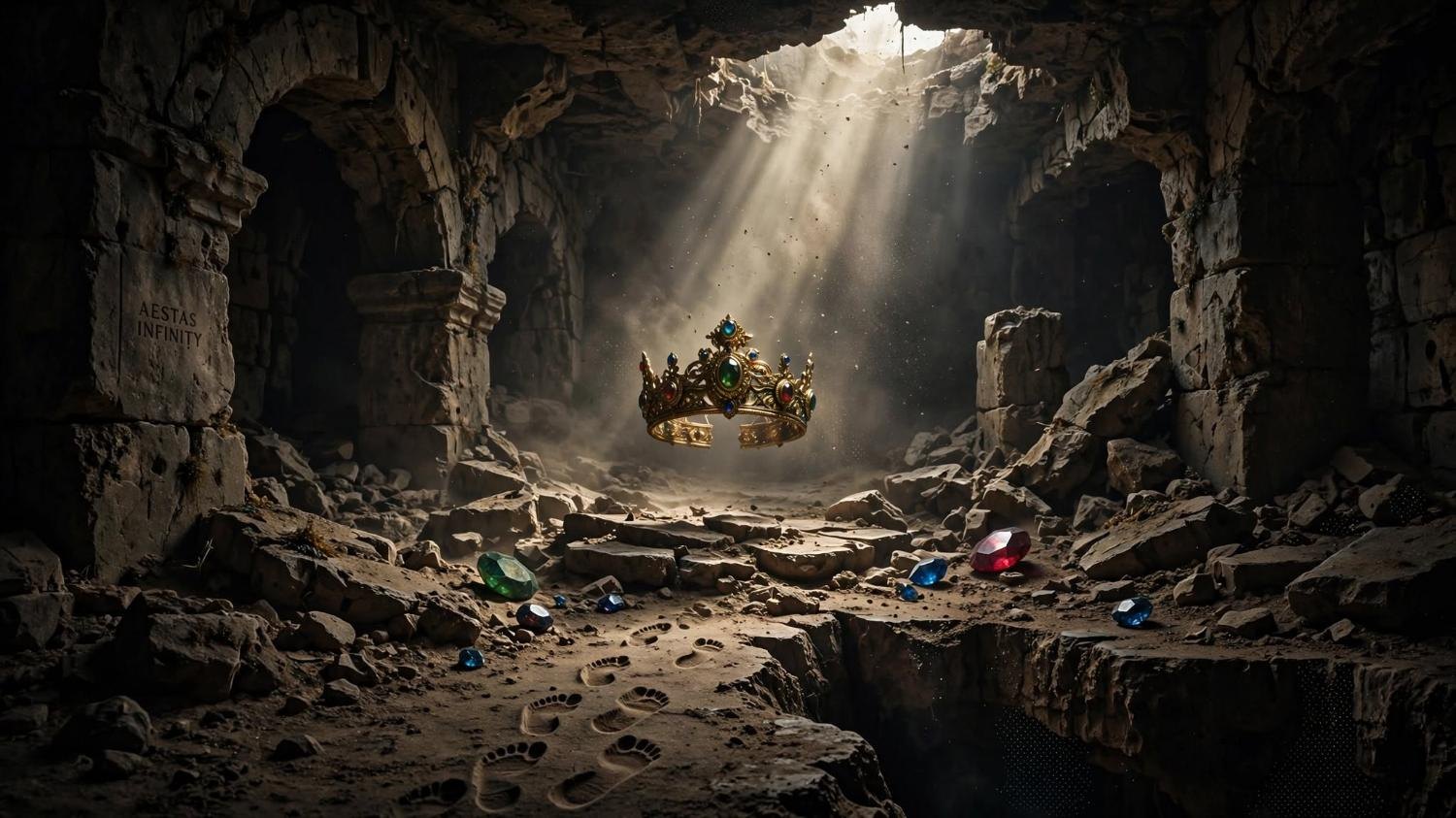
The screening
The picture is filed as Dust Crown.
Scenario
2:57 · 16:9
Broken arches hold a single shaft of daylight and nothing else that still carries a name. No plaque remains. No painted word survives on the stone. Dust moves in the shaft and looks, for a moment, like a decision, then is only dust. In the shaft a crown floats at the height of a face: tarnished gold, cracked gems, dust caught hard in the settings. It turns so slowly the turn is almost a stillness. Footprints come out of the surrounding dark and stop in a clean line where the light begins. The prints are fresh enough to show a tread and old enough that their edges have begun to soften.
A cloaked figure waits on the dark side of that line. A crown of plain stone sits on the hood, heavy and dull, seated low so the hood cannot lift. The figure raises one hand and does not step into the shaft. The hand is empty. A drift of dust strikes the floating crown. The gold sinks an inch and holds at the new height. The gems click once against their settings and go quiet. Behind the figure, the footprints fill with the same dust until the dark floor is smooth again and shows no path. The filling is patient. Heel, then arch, then toe, each print erased in the order it was made.
The raised hand stays raised. The stone crown on the hood remains just outside the light. A rim of the stone almost enters the shaft and does not. The gold crown hangs lower than before, gems cracked, dust bright along the metal where the drift struck. The prints end where they ended, which is to say they no longer end, because the floor is smooth. The shaft does not shift to take the figure in.
The cloaked figure's raised hand begins to tire and does not drop. Dust gathers along the wrist and makes a pale cuff that stops where the light stops. A cracked gem gives one more tiny tick, settling deeper into its claw, and the crown's height does not change for that. Outside the shaft the smoothed floor stays smooth. No new print arrives from the dark to replace the ones the dust erased. The stone crown on the hood catches no gold. It remains a weight the hood agrees to carry without entering the day.
Time passes as the floating crown completes a small turn and shows a gem that has split into two dull halves. A second drift strikes the gold and the crown does not sink further. It only shivers, a brief soundless tremble, and then hangs steady at the inch it already gave up. The raised hand does not beckon it lower. The stone crown stays in the dark. The shaft keeps its gold at the new height, and the smoothed floor behind the figure offers no path back into a name.
Shooting script
Scene 1. Ruined hall. Day. 2:57. 16:9.
One place. One hour. It stays one scene.
A cloaked figure waits outside a shaft of day while a tarnished crown sinks an inch in the light.
No dialogue.
Breakdown
Day hour. Two crowns and one shaft of light.
Cast. One cloaked figure on the dark side of the light. A plain stone crown on the hood. One empty hand raised.
Ruined hall. Broken arches. One shaft of daylight. No plaque and no painted word on the stone.
Gold crown. Tarnished gold floating at face height. Cracked gems. Dust caught in the settings. It sinks one inch and later shivers without sinking again.
Stone crown. Plain, heavy, dull, seated low on the hood so the hood stays down. It remains outside the shaft.
Footprints. Fresh treads that stop at the light and then fill with dust from heel to toe until the unlit floor is smooth.
Dust. Dust in the shaft. A drift that strikes the gold. A pale line of dust along the raised wrist that halts where the light stops.
Shot list
Camera. One scene. 16:9.
Nobody looks into the lens. The sizes below are the decoupage, not the literary script.
1 · 0:00–0:13 · Wide. Broken vaults hold a single shaft of day in a hall with no remaining name.
2 · 0:13–0:25 · Medium. A tarnished crown floats in that shaft at the level of a face and turns very slowly.
3 · 0:25–0:37 · Close. Cracked gems hold hard dust in their settings.
4 · 0:37–0:50 · Wide. Footprints come out of the unlit and stop in a sharp line where the light begins.
5 · 0:50–1:03 · Medium. A hooded figure pauses on the dark side, a plain stone crown low on the hood.
6 · 1:03–1:15 · Close. One empty hand rises and stays short of the shaft.
7 · 1:15–1:28 · Medium. A waft of dust hits the gold, and the crown sinks an inch.
8 · 1:28–1:40 · Macro. The jewels tick once against their claws and go quiet.
9 · 1:40–1:53 · Wide. Behind the figure, dust fills each print from heel to arch to toe until the floor is smooth.
10 · 1:53–2:05 · Close. A rim of the stone crown nearly meets the light and stays outside it.
11 · 2:05–2:18 · Macro. Dust gathers along the raised wrist into a pale cuff that ends at the light.
12 · 2:18–2:31 · Close. A cracked gem ticks deeper into its claw while the crown holds the new height.
13 · 2:31–2:44 · Medium. A second drift hits the gold, the crown shivers, and the height stays.
14 · 2:44–2:57 · Wide. The stone crown remains in the dark over a floor that now shows no path.
Lookbook
One daylight shaft on gold.
A single shaft of day is the only light, falling through broken arches. It hits the floating crown and makes the tarnish and the cracked gems readable. Dust in the shaft looks briefly like a decision and is only dust. The cloaked figure and the stone crown stay on the unlit side of that line, so the gold is the lit object and the stone one is not.
Palette
Day shaft. #E7D7B8. The single column of light
Tarnished gold. #B08948. The floating crown
Cracked gem. #6E3E46. Stones in the settings
Hall stone. #7A756C. Broken arches and floor
Cloak. #2B2926. The figure outside the shaft
Stone crown. #8D887E. Plain weight on the hood
Dust. #C2B49A. Drift in the light and the pale wrist line
Smooth floor. #4E4A44. Dark ground after the prints fill
Lens
Wide holds the broken arches and the single shaft. Medium holds the floating crown and the cloaked figure on either side of the light. Close and macro hold the gems, the raised hand, and the pale dust on the wrist. Nothing outside the hall is added.
Costume
A cloak held down by stone.
The cloaked figure is 48. A cloak and hood are the cloth, with a plain stone crown seated low so the hood stays down.
The raised arm takes a line of dust that reads as a pale cuff and stops where the light stops. That dust cuff is the change. The cloak itself never crosses into the shaft.
No second person is dressed. The footprints fill and leave no one else to costume.
Design
A shaft, a floating crown, a smooth floor.
The hall is broken arches and one hard shaft of day, with the rest in dark. No plaque survives. The floor on the dark side must take footprints and then lose them under dust, heel then arch then toe.
The gold crown floats at face height, turns very slowly, sinks one inch when dust strikes, and later only shivers. Gems are cracked and can click and tick deeper. The stone crown is a real weight on the hood and stays outside the light.
Dust has to move in the shaft, strike metal, and gather on a wrist. The raised hand stays empty.
Makeup and hair
A hidden face and a dusty wrist.
The hood and the stone crown hide the face. No feature is asked to read.
The raised hand is empty. Dust settles on the forearm and makes a pale line that ends at the light. Skin under that dust stays unbroken.
Hair stays inside the hood. The other hand is unseen and unused.
Sound
No score. Dust, one gem click, a quiet hall.
Hall. Open ruined quiet. No voice.
Dust drift. A soft pass through the shaft. It strikes the crown with almost no impact.
Gem click. One small click in the settings, then quiet. Later one tiny tick as a gem settles deeper.
Footprints filling. A patient, nearly silent erase. No footstep arrives to replace them.
Shiver. The second strike makes a brief soundless tremble. Height stays.
Cloth. The cloak is still. No hem travel.
Shaft. Day itself is silent. The gold hangs without a hum.