Fragment of a Larger Night
Key art
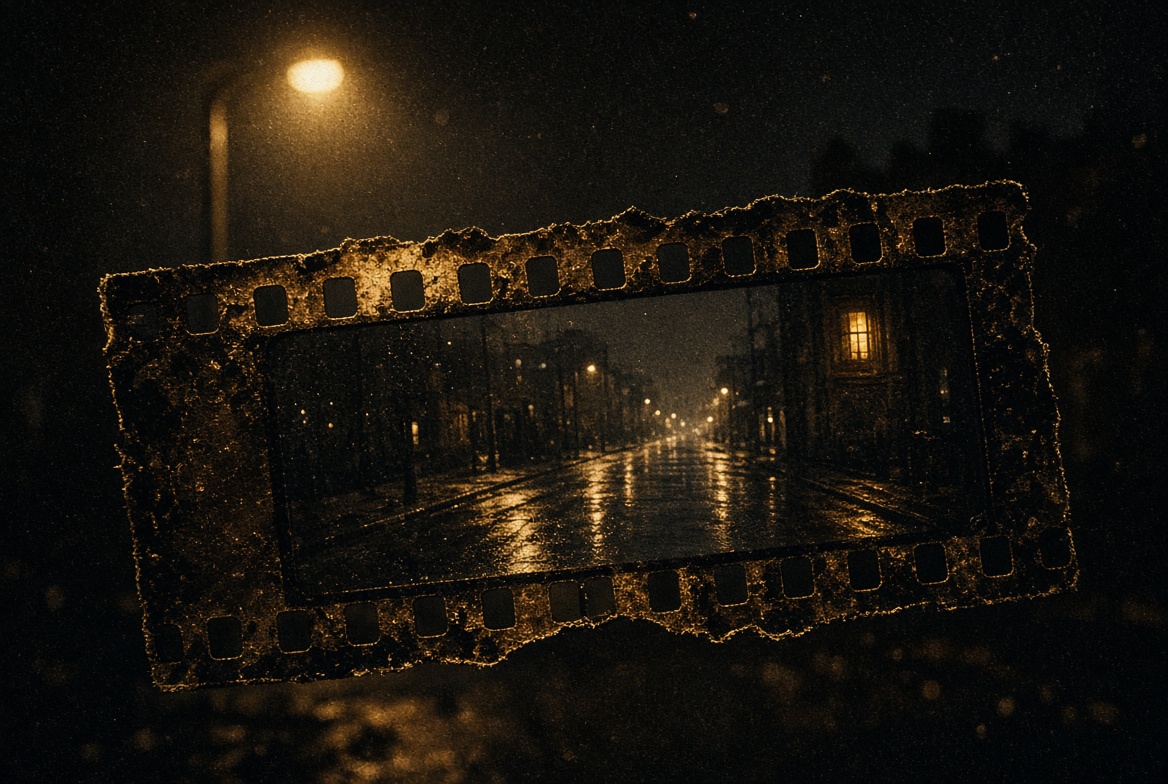
The screening
The picture is filed as Fragment of a Larger Night.
Scenario
2:57 · 16:9
Fen Arkwright keeps pieces of nights that were never stored as wholes. On the blotter lies one piece: a torn corner of a night log, a single hour, a streetlamp noted, a sleeve described and then the paper gone. The tear is rough. The ink stops mid-word at the rip. The rest of the night is implied by the tear and is not in the room. A tin beside his elbow is heavy enough to hold the missing pages. Dust sits on the lid in a dull skin. He does not open it and lay the night out. He rests a hand on the lid. The hand prints the dust and he does not blow the print away.
The fragment asks, by its broken sentence, for the verb that would finish the hour. Fen reads the line to its end, which is not an end. His mouth does not supply the missing verb. He lifts the tin lid a finger's width. Dark paper shows, the larger night waiting to be spread out and understood, edges packed tight. Supplying it would turn the piece into a trailer for a story he will not run. He shuts the lid. The click is small. Dark paper, in the last of the gap, slides lower inside the tin, a soft settling heard and not seen again.
The lamp shows the rough tear as a pale fur and does not show the pages inside the tin. Fen's fingers, ink-stained at one nail from other nights, stay off the fragment once the stamp is down. He does not fetch a second lamp to read what the tear ate. The streetlamp noted on the paper is only a word. No streetlamp exists in this room. The sleeve described there is only a few letters of cloth, color unfinished, owner unnamed. He lets those letters be enough. The tin's dust, printed by his hand, slowly loses the print as new dust does not fall and the old dust settles back into an even skin. He watches that healing of the lid and does not open it to stop the night from staying packed.
He squares the fragment on the blotter, weights it with a dry stamp, and leaves the tin closed. The stamp leaves no ink, only a pressure. Dust on the tin is not decoration. It is simply dust. The lamp shows the torn edge and stops. Time passes as the pressure dent in the fragment slowly eases and does not disappear. One letter at the tear pales, the ink giving up the last stroke of a word, and the word becomes even less of an ending. The fragment stays on the blotter. The tin that could have held the rest stays shut, the dry stamp weighting a corner that will not be completed tonight.
The dry stamp stays on the fragment and the tin stays shut.
Shooting script
Scene 1. Night desk. Night. 2:57. 16:9.
One place. One hour. It stays one scene.
Fen Arkwright weights a torn hour with a unused stamp and leaves the tin of the larger night shut.
No dialogue.
Breakdown
Night hour. A torn corner and a shut tin.
Cast. Fen Arkwright. One adult man. An ink-stained nail. A hand that prints dust on a lid.
Night desk. A lamp. A blotter. The ripped corner of a night log: one hour, a rough rip, ink stopped mid-word.
Fragment. Words for a streetlamp and a sleeve that are only ink. No streetlamp in the room. The tear can pale at one letter. A pressure dent from the stamp eases and stays.
Tin. Heavy, dust on the cover in a dull skin. Dark paper packed inside. The lid lifts a finger's width and shuts. The handprint in the dust slowly evens out.
Dry stamp. A stamp that leaves pressure and no ink. It weights a corner of the fragment.
Lamp. Shows the tear as a pale fur. Shows nothing of the pages inside the tin.
Shot list
Camera. One scene. 16:9.
Nobody looks into the lens. The sizes below are the decoupage, not the literary script.
1 · 0:00–0:13 · Wide. A night desk holds a lamp, a blotter, and a heavy tin.
2 · 0:13–0:25 · Close. On the blotter lies a torn corner of a log, one hour, the ink stopped at a rough rip.
3 · 0:25–0:38 · Medium. Fen Arkwright rests a hand on the dusty lid and leaves the print.
4 · 0:38–0:50 · Close. He reads the broken line to the rip and keeps his mouth shut.
5 · 0:50–1:03 · Medium. He lifts the lid a finger's width, and dark packed paper shows.
6 · 1:03–1:15 · Close. He shuts the lid with a small click, and the dark paper settles lower inside.
7 · 1:15–1:27 · Macro. The lamp shows the rip as a pale fur and shows nothing packed in the tin.
8 · 1:27–1:40 · Close. His ink-stained nail stays off the scrap once the stamp is down.
9 · 1:40–1:53 · Medium. He squares the fragment and weights it with the dry stamp.
10 · 1:53–2:05 · Macro. The stamp leaves pressure and no ink.
11 · 2:05–2:18 · Close. Dust on the lid loses the handprint and returns toward an even skin.
12 · 2:18–2:31 · Medium. The lamp stops at the torn edge.
13 · 2:31–2:44 · Close. The pressure dent eases and remains.
14 · 2:44–2:57 · Macro. One glyph at the tear pales, losing its last stroke, and the fragment stays under the dry stamp.
Lookbook
Lamp on the torn corner.
A desk lamp is the only source. It rakes the rough tear into a pale fur and stops there. The tin's dusty lid takes a dull skin of the same light, enough to show a handprint and its slow evening. The packed paper inside gets one brief look and then goes dark when the lid shuts.
Palette
Lamp. #F0D4A8. Pool on the blotter
Blotter. #C4A882. The desk pad
Torn paper. #E7DCC4. The fragment and its pale fur
Ink. #2A2622. The stopped word
Tin. #6E7270. The heavy lid
Dust. #B7A98E. Dull skin and the handprint
Dark paper. #1E1A16. Packed sheets glimpsed and shut away
Stamp. #8A4E3A. Dry weight, no fresh ink
Lens
Wide holds the night desk, the lamp, and the tin. Medium holds Fen over the blotter. Close and macro hold the tear, the handprint, the dry stamp, and the paling letter. No street from the fragment is built in the room.
Costume
No named cloth. An ink-stained nail.
Fen Arkwright is 49. The page names no garment on him.
The sleeve written on the fragment is ink, not his clothing. Nothing he wears is added or removed. His hand meets the dusty lid and leaves a print that the dust slowly evens.
No second person comes to the desk.
Design
A fragment weighted, a tin shut.
A night desk, a lamp, a blotter, and one torn corner. The tear is rough. The ink stops mid-word. The written streetlamp and the written sleeve stay words.
The tin is heavy, dust dull on the lid, dark paper packed tight. The lid opens a finger's width and shuts with a small click, and the paper settles lower. The handprint in the dust evens out without new dust falling.
A dry stamp weights the fragment and leaves pressure only. The dent eases and stays. One letter at the tear can pale.
Makeup and hair
A shut mouth and an ink-stained nail.
Fen's mouth stays shut at the missing verb. His face watches the tear and the healing lid. No paint.
One nail is ink-stained from other nights. The palm prints the dust and later stays off the fragment. No fresh ink lands on skin.
Hair is unnamed and stays out of the lamp. The dust is on the tin, not rubbed into the face.
Sound
No score. A tin click and paper settling.
Room. Night quiet around the lamp.
Lid. A small lift, then a small click shut.
Paper inside. A soft sink, heard and not seen again.
Stamp. Pressure only. No ink smack.
Dust. Silent as the handprint evens.
Tear. The paling letter makes no sound.
Mouth. Shut. The missing verb is never supplied aloud.