Grey District
Key art
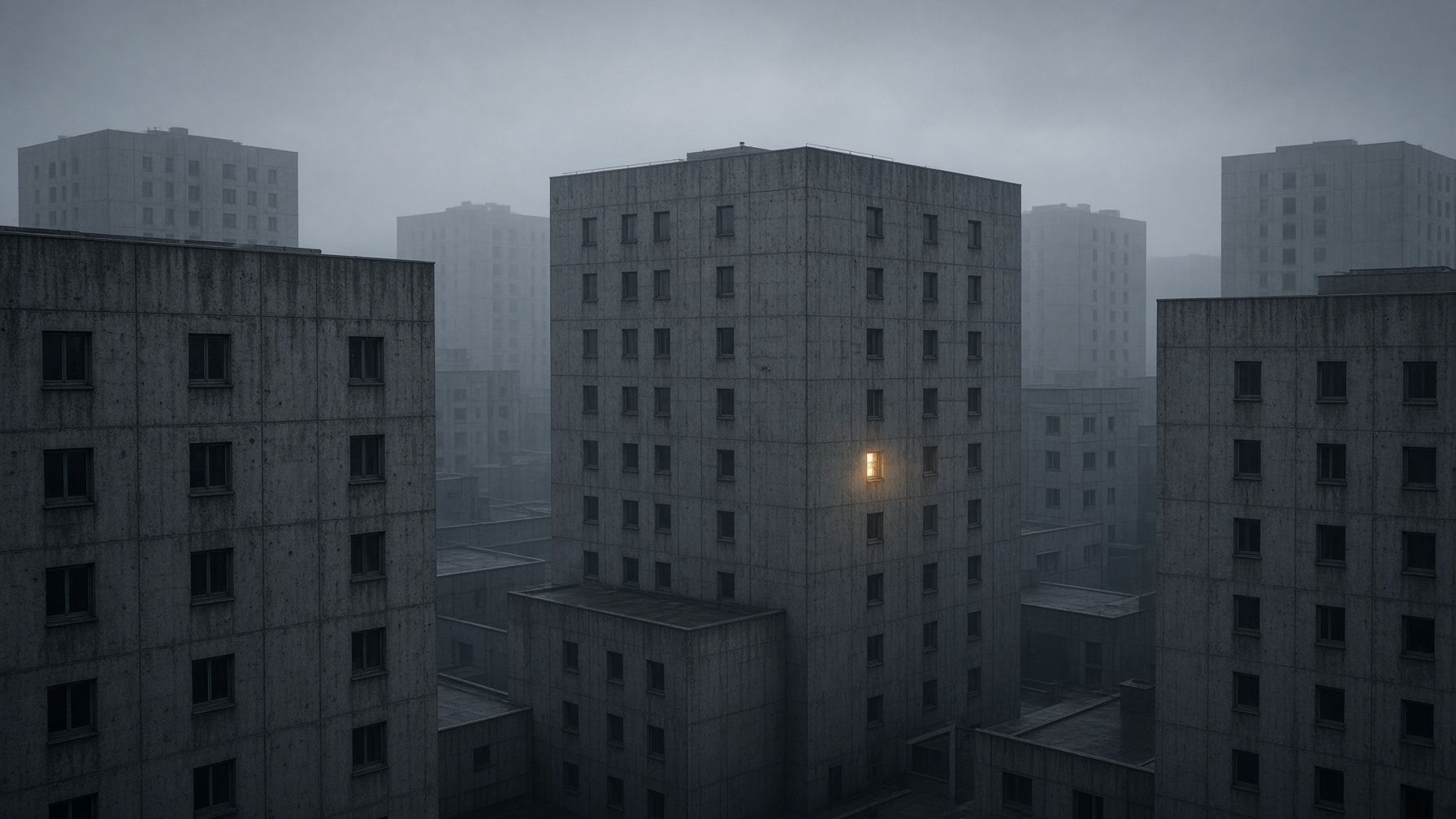
The screening
The picture is filed as Grey District.
Scenario
2:57 · 16:9
A room in a grey block holds a table, two chairs, and a window the color of tin. The paint on the sill is the same grey as the air outside. Nothing hangs on the walls. A woman and a man come in and set down nothing. Their hands open at their sides and stay empty. They move a chair. The chair slides back to its old mark before they sit, legs finding four pale scars in the floor. They turn a cup. The cup turns itself rim-out again, the way it was, a slow correction that finishes without a hand on it. They wait to see if it will turn a second time. It does not. The handle ends where it began.
They sit. The room goes still, and the stillness has a cost no one names: dust does not stir, and the window does not tick with rain. The tin light does not change its shade. Their breath does not fog the glass. Dust lies in rings on the table for two cups. A third ring is there too, smaller, older, the dust higher at its rim as if it has been keeping a place through more than one stillness. The woman looks at the third ring. The man looks at his own hands and then at the same ring.
A third cup fades up inside that ring. Neither of them brought it. It is dry and chipped, and it matches the ring exactly. The chip faces the woman. The fade is not sudden. The clay thickens out of the air until the chip is solid enough to throw a small shadow. She reaches and stops with her fingers above the chip. The man looks at the window. The grey outside does not offer a name for the extra cup. Her fingers hover. A grain of dust on the chip does not fall. She draws the hand back to her own cup and does not turn that one either. The third cup's shadow stays on the table after her hand is gone.
They do not drink. They do not move the third chair that is now under the window, its legs in four old dents. The dents are deeper than the scars under their own chairs. The third chair faces the table and holds no coat, no hat, no weight. The first two chairs hold them. The third holds no one. A floorboard under the third chair gives a small tick and goes quiet, as if it had accepted a sitter and then found the seat empty. The tick does not come again. The man's shoe shifts and he sets it back where it was.
The chipped cup stays in its ring. The chip does not lengthen. The two of them stay seated, coats unbuttoned and then left that way, with nothing poured. Their own cups remain rim-out and dry. The window keeps its tin color. The room keeps the third place ready, and neither hand takes it. Dust holds all three rings in the same still air, the smallest one no less exact than the two they might have claimed.
Shooting script
Scene 1. Grey room. Day. 2:57. 16:9.
One place. One hour. It stays one scene.
A woman and a man enter a grey room empty-handed, and a chipped third cup arrives inside an older dust ring.
No dialogue.
Breakdown
Day hour. The grey room, the third cup, and the third chair.
Cast. Woman, thirty-eight. Man, forty-four. Both in coats. No third body, even after the third chair is in place.
Room. A grey block room. Bare walls. A table. Two chairs with four pale floor scars each. A tin-colored window whose sill paint matches the outside air.
Cups and rings. Two dry cups that can correct themselves rim-out. Dust rings for those two, plus a smaller, older third ring with a higher dust rim. A third cup, dry and chipped, that can thicken into that ring. The chip faces the woman.
Third chair. A chair under the window in four older, deeper dents. It faces the table. It holds no coat, no hat, and no sitter.
Floor. One floorboard under the third chair that can tick once and go quiet. Pale scars under the first two chairs. The man's shoe returns to its first place.
Coats. Two wool coats that unbutton and stay open. Nothing is poured into any cup.
Shot list
Camera. One scene. 16:9.
Nobody looks into the lens. The sizes below are the decoupage, not the literary script.
1 · 0:00–0:18 · Wide. A grey room holds a table, two chairs, and a window the color of tin.
2 · 0:18–0:31 · Medium. A woman and a man come in with open, empty hands and set nothing down.
3 · 0:31–0:42 · Close. They shift a chair, and its legs find four pale scars before either of them sits.
4 · 0:42–0:54 · Macro. A cup turns itself rim-out again, and the handle finishes at its first mark.
5 · 0:54–1:07 · Medium. They sit; dust lies in two cup-rings, and a smaller older ring waits between them.
6 · 1:07–1:18 · Close. The woman studies the third ring; the man looks from his hands to the same circle.
7 · 1:18–1:30 · Medium. A chipped cup thickens out of the air inside that ring until the chip throws a shadow.
8 · 1:30–1:43 · Macro. Her fingers hover over the chip; a grain of dust on the clay stays put.
9 · 1:43–1:54 · Close. She draws the hand back to her own cup and leaves that one rim-out as well.
10 · 1:54–2:06 · Wide. A third chair now stands under the window, legs in deeper dents, holding nobody.
11 · 2:06–2:19 · Close. A floorboard under that chair ticks once and goes quiet.
12 · 2:19–2:31 · Medium. The man's shoe shifts and settles back where it was.
13 · 2:31–2:43 · Wide. Both coats stay unbuttoned; all three cups stay dry; the tin window keeps its color.
14 · 2:43–2:57 · Medium. The smallest dust ring remains as exact as the two that match the cups they might have claimed.
Lookbook
Tin light on grey paint.
Day at the window is the color of tin, and the sill is painted the same grey as the air outside. That light makes three dust rings readable on the table, the smallest one higher at its rim. When the chipped cup thickens into the ring, the tin light gives the chip a small hard shadow. Breath leaves the glass clear. The third chair, under the window, sits in the thinnest part of that grey.
Palette
Block grey. #8E8E8A. Walls, air, and the painted sill
Tin window. #B7C0C4. The glass and the light it admits
Table dust. #C8C2B4. Three rings on the tabletop
Chipped clay. #A68462. The third cup and its chip
Cup shadow. #4A4742. The small shadow under the chip
Floor scar. #D9D2C6. Pale marks under the chair legs
Wool coat. #3E4A58. The woman's open coat
Second coat. #6B5344. The man's open coat
Lens
Wide holds the bare room, the tin window, and all three chairs. Medium holds the two sitters and the fade of the third cup. Close and macro hold the self-turning cup, the dust rings, the chip, and the hovering fingers.
Costume
Two coats left open in a grey room.
The woman is thirty-eight. Her coat is dull blue-grey wool. She unbuttons it after they sit, and it stays open. Under it, a plain darker dress. Nothing is added to the collar. Her cuffs stay clear of the cups.
The man is forty-four. His coat is brown wool, also unbuttoned and left that way. The open fronts are the only change either coat makes. No hat comes off because no hat is worn. Both of them keep their hands empty of any poured cup.
Design
A bare grey room with three places set in dust.
The room is a grey block with bare walls, one table, and a window the color of tin. Paint on the sill matches the outside air. Two chairs must slide and then find four pale scars each. A cup must be able to turn itself rim-out with no hand on it.
Dust is dressed as two rings plus a smaller, older third ring. A dry chipped cup must be able to thicken into that third ring, chip toward the woman, and keep a shadow after her hand leaves. A third chair belongs under the window in deeper dents, empty of coat, hat, and weight. One floorboard there ticks once.
Makeup and hair
Bare hands over a chip of clay.
The woman is thirty-eight. Hair is pinned off the face so the third ring stays visible past her cheek. Skin is plain, no powder catching the tin light. Her hand stops above the chip and returns to her own cup, fingers clean.
The man is forty-four. Hair is short. He looks at his own hands before he looks at the ring, so the hands read empty and ordinary. No one drinks, so no stain touches either mouth. The third place has no hair and no skin to dress, because nobody sits there.
Sound
No score. A sliding chair, a floor tick, and still air.
Chair scars. Legs scrape, then seat themselves into four pale marks. The correction finishes before anyone sits.
Cup correction. A slow ceramic turn, rim finding its first direction. It happens once and stays finished.
Still air. After they sit, dust stays down and the window stays silent. Breath leaves no fog on the glass.
Cup fade. The third cup arrives with almost no sound, only a faint thickening, until the chip is solid enough to shadow.
Hover. Cloth and a small shift of weight as her fingers stop above the chip and withdraw.
Board tick. One small tick under the third chair, then quiet. The man's shoe scuffs and is set back.
Three rings. The hold is dry and still. No pour, no second tick, no rain on the tin glass.