Holy Absence
Key art
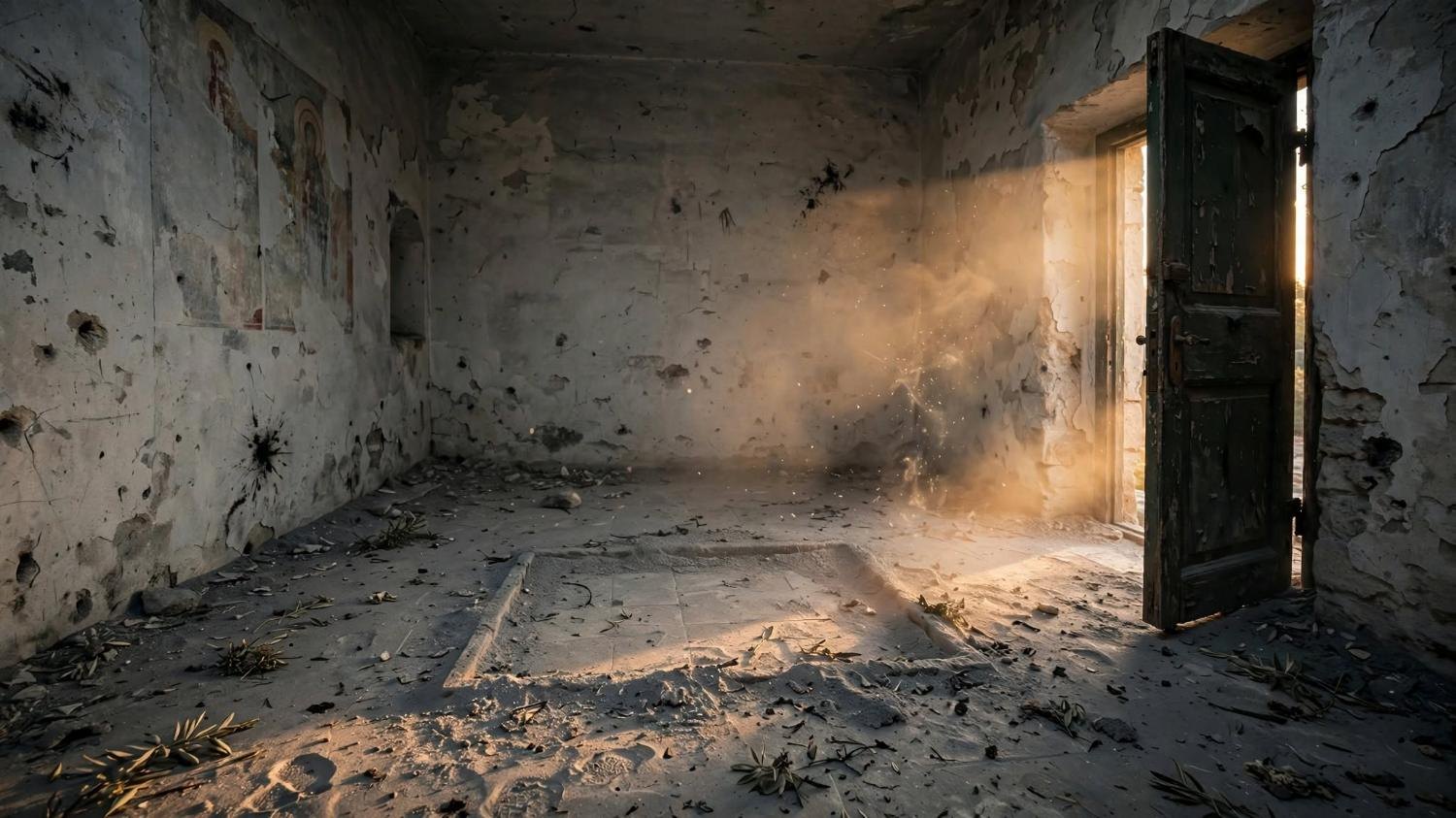
The screening
The picture is filed as Holy Absence.
Scenario
2:57 · 16:9
Late light crosses an empty plaster room. It moves slowly enough to watch, a band traveling the floor and climbing nothing. Dust is even on the floor except for a worn rectangle where feet stood, or where something stood in front of feet. The dust outside that rectangle is thicker. The walls are bare. A blank icon hangs on one of them. Only the soot shadow of a saint remains on the plaster around the pale board. The soot does not flake. A nail at the top of the board holds, and the board does not swing.
A hooded hand rests on the door. The wood is pale where other hands have rested and dark everywhere else. On the wall inside, a second rectangle is empty: cobweb in one corner, a single nail hole, ash along the lower edge. The ash is a thin grey line, already settled, not falling.
The hand opens the door. Hinges complain once. The hood stays up. The figure steps in and stops at the near side of the floor's worn rectangle, not on it. Dust there is thinner, pressed, and does not rise to the shoes. The shoes' shadow falls across the near edge and does not darken the worn place itself. The figure looks at the blank icon. The soot shadow does not shift when the light from the door hits it. No face returns to the board. The pale board stays pale. Late light reaches it and does not invent a mouth or an eye.
The hand goes back to the door and stays there. The figure does not cross the rectangle. Breath, visible in the cooler air by the door, does not disturb the pressed dust. The nail hole in the empty wall stays empty. A thread of the cobweb sags toward that hole and stops short of it. Ash does not fall. A grain at the end of the ash line brightens as the light arrives and does not loosen.
Dust in the worn rectangle holds the shape of a standing place. The blank board holds the soot and nothing else. The hand remains on the door. The band of late light keeps both rectangles visible, the one on the floor and the one on the wall, and neither of them fills. The figure does not kneel, does not touch the board, and does not take the last step the worn dust has already kept for someone else.
The figure's shoes do not edge forward. Late light slides another inch across the worn rectangle and leaves the pressed dust the same pale color. The soot around the blank board does not follow the light. The cobweb's sagged thread stays short of the nail hole and does not break. Ash along the lower edge of the empty rectangle keeps its line. The door, under the hand, neither opens farther nor shuts. Both empty places remain empty while the hooded figure keeps the near side of the worn dust and does not take the standing place the floor has already kept.
Shooting script
Scene 1. Plaster room. Day. 2:57. 16:9.
One place. One hour. It stays one scene.
A hooded adult opens a plaster room, stops short of a worn rectangle, and leaves a blank icon untouched.
No dialogue.
Breakdown
Day hour. The plaster room, the blank board, and the worn dust.
Cast. One hooded adult, forty-nine. The hood stays up. No second person. No one kneels.
Floor. Even dust, except a worn rectangle of thinner, pressed dust. Shoes stop at the near side. A shadow from the shoes crosses the near edge and leaves the worn place undarkened.
Blank icon. A pale board on a bare wall. Soot shadow of a saint around it, soot that stays put. A nail at the top that holds. The board stays still. Late light reaches it and adds no mouth and no eye.
Second rectangle. An empty rectangle on the inside wall. Cobweb in one corner. One nail hole. A thin grey ash line along the lower edge, already settled. One thread sags toward the hole and stops short.
Door. Wood pale where hands have rested, dark elsewhere. Hinges that complain once. The door opens, then neither opens farther nor shuts under the waiting hand.
Light. A slow band of late day across the floor, climbing nothing, able to slide another inch over the worn rectangle without changing its pale color.
Shot list
Camera. One scene. 16:9.
Nobody looks into the lens. The sizes below are the decoupage, not the literary script.
1 · 0:00–0:18 · Wide. Late light crosses an empty plaster room, a slow band on the floor and a blank board on the wall.
2 · 0:18–0:31 · Close. Dust is even except for a worn rectangle, thinner where something once stood.
3 · 0:31–0:42 · Medium. Soot keeps the shadow of a saint around the pale board; a nail holds the top; the board stays still.
4 · 0:42–0:54 · Macro. A hooded hand is set on the door, pale wood under the fingers and dark wood beyond them.
5 · 0:54–1:07 · Close. On the inside wall a second rectangle is empty: cobweb, a nail hole, and a thin line of ash.
6 · 1:07–1:18 · Medium. The hand opens the door; the hinges complain once; the hood stays up.
7 · 1:18–1:30 · Wide. The figure stops at the near side of the worn rectangle; dust there stays down, off the shoes.
8 · 1:30–1:43 · Close. The shoes' shadow falls across the near edge and leaves the worn dust its own pale.
9 · 1:43–1:54 · Medium. The figure faces the blank icon; late light hits the board and adds no face.
10 · 1:54–2:06 · Macro. A cobweb thread sags toward the nail hole and stops short of it.
11 · 2:06–2:19 · Close. Breath shows in the cooler air by the door and leaves the pressed dust undisturbed.
12 · 2:19–2:31 · Wide. The hand returns to the door and stays; the band of late light holds both empty rectangles.
13 · 2:31–2:43 · Medium. Light slides another inch across the worn dust; the color of that dust stays the same.
14 · 2:43–2:57 · Wide. The hooded figure keeps the near side; both empty places stay empty.
Lookbook
Late day on bare plaster.
Late day enters as a slow band and travels the floor without climbing the walls. It reaches the pale board and leaves the board pale. The soot shadow around it refuses to follow that light. The worn rectangle stays a lighter dust even when the band slides another inch across it. One grain at the end of the ash line brightens as the light arrives and stays seated in the line. The hood keeps the figure's face out of that band.
Palette
Plaster. #E7DCC8. Bare walls of the empty room
Worn dust. #D9CDB6. The thinner rectangle on the floor
Thick dust. #B7AA94. Dust outside the rectangle
Soot shadow. #3A342E. The saint's shadow around the board
Pale board. #F1E6D2. The blank icon
Ash line. #9A9286. Settled ash on the empty wall rectangle
Hood cloth. #2C3338. The figure's hood and sleeve
Door wood. #C4A882. Pale patches where hands have rested
Lens
Wide holds the plaster room, both rectangles, and the figure stopped at the dust. Medium holds the hooded body in the doorway. Close and macro hold the hand on the pale wood, the soot edge, the sagging cobweb, and the ash grain.
Costume
A hood that stays up.
The figure is forty-nine. A dark hooded coat, the hood already up at the door and still up inside. The sleeve ends so the hand can rest on the pale wood and return to it. The coat takes no dust from the worn rectangle, because the shoes stop short of it.
Nothing is lowered, opened, or exchanged. The hood is the whole costume fact: it stays up, and the hand on the door is the only skin the room is given. No belt is undone. No second garment waits inside.
Design
Bare plaster, two empty rectangles, one blank board.
The room is bare plaster with even dust and one worn rectangle of thinner, pressed dust. A blank icon hangs on a nail: pale board, soot shadow of a saint that stays put, the board itself still. A second wall rectangle is empty except for a corner cobweb, a nail hole, and a settled ash line.
The door is pale only where hands have rested. It opens with one hinge complaint and then holds under the hand, neither wider nor shut. Late light is a slow band that can travel the floor and slide one more inch across the worn dust without changing that dust's color. The figure's shoes stop at the near edge.
Makeup and hair
A hooded face, a hand on pale wood.
The figure is forty-nine. The hood hides the hair and most of the face. What shows at the opening is adult skin, unpainted, cool in the doorway air. Breath is visible there and stays off the floor dust.
The hand on the door is the detailed skin: fingers on wood that other hands have already paled. Nails are clean. The hand returns to the door and stays. No one touches the board. No knee meets the floor. Ash and soot stay on the wall, not on the skin.
Sound
No score. One hinge, visible breath, and a quiet floor.
Late room. A dry hush. Dust is already down. The light's travel makes no sound.
Hinge. One complaint as the door opens. After that the door holds, with the hand on it and no second creak.
Steps. Shoes come in and stop at the near side of the worn rectangle. Dust stays off them.
Breath. A soft breath, visible in the cooler air by the door, too light to lift the pressed dust.
Cloth. The hood and sleeve shift once as the hand goes back to the door, then settle.
Ash and web. No fall of ash. The sagging thread makes no tick. The nail hole stays empty and silent.
Held door. The last stretch is the room tone and one person breathing at the threshold of the worn dust.