Named Shadows
Key art
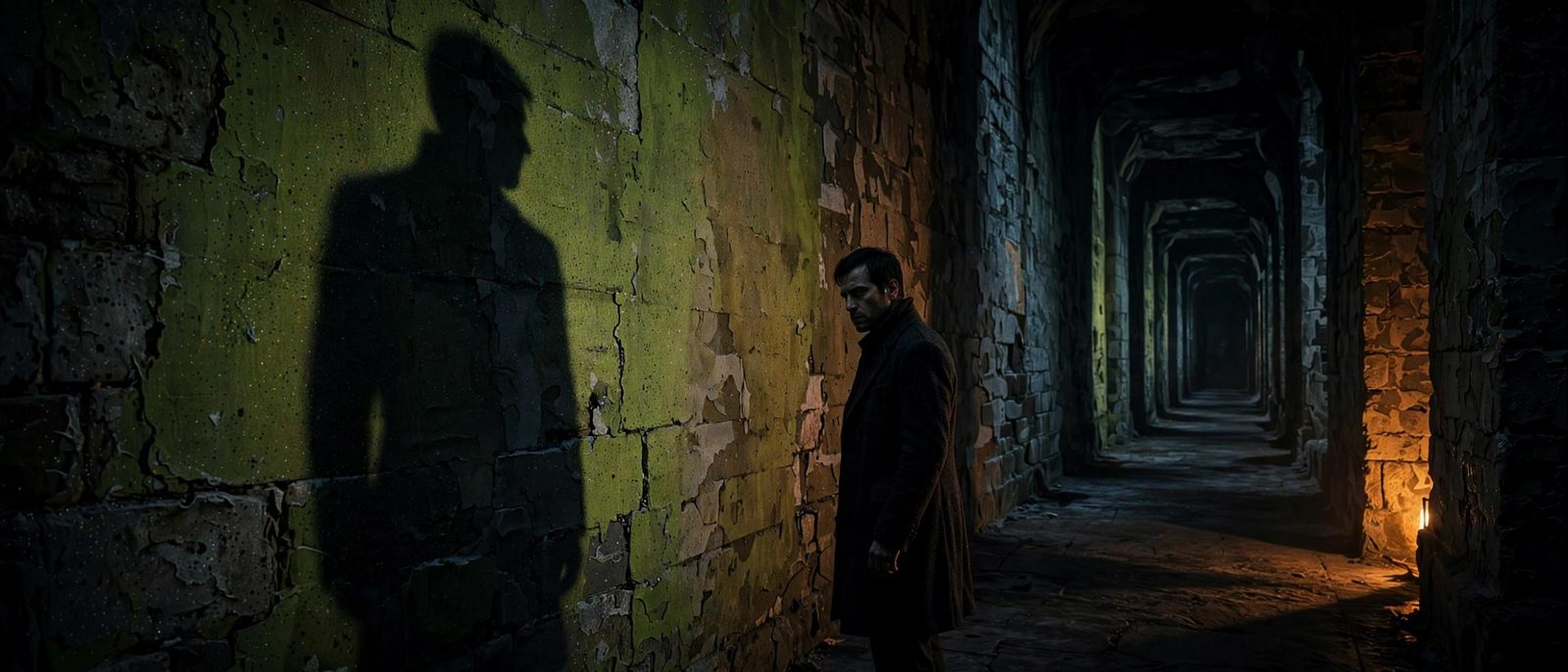
The screening
The picture is filed as Named Shadows.
Scenario
2:57 · 16:9
Torchlight runs along hanging cloth. The cloth moves only when the flame moves. A man walks, and his shadow is larger than he is and already ahead on the stones. The shadow's head clears a height his own head does not. Between the cloths the middle of the corridor holds no one. Plaster at his shoulder softens and opens like water. A face forms there, mouth working, silent. No sound comes from the working mouth. The eyes of it, if they are eyes, do not find a direction that includes him for long.
An arch stops him. A fiery silhouette fills it, too tall for him to match. Heat comes off the arch and does not burn the nearest cloth. He speaks a name into the cloth. The cloth takes the breath and does not answer in its own voice. The wall-face gives the name back, late, in his own voice. The delay is long enough to hear. He does not speak a second name to correct it.
Two hooded figures come out of the hangings. One is little more than bone under the hood. The bones are dry. He speaks the name to them. His shadow leaves the floor, enters the arch, and stands inside the fire at the fire's own size. The stones where the shadow was are only stones. The bone-figure turns its empty hood toward the sound. The second figure lifts a hand and does not touch him. The lifted hand stops in the air beside his sleeve.
Torch smoke climbs the hanging cloth and leaves a dark tongue on the plaster. The face in the wall closes. The plaster is plaster again, mouth gone, the name not gone with it. He goes quiet. The quiet does not call the shadow back down to his feet. Hanging cloth lines an empty middle. His shadow remains in the arch, edged in fire, larger than the man who has stopped saying the name.
The bone-figure's empty hood stays turned toward the place the name was spoken. The second figure's hand lowers without having landed. Smoke thins and the dark tongue on the plaster stays. The man does not step into the arch to stand where his shadow stands. He remains short of the fire. The shadow remains inside it, the size of the silhouette, and the corridor's empty middle keeps no second body to take the name from him.
Cloth stirs once and hangs. The torch does not go out. The closed plaster does not open a new mouth. He has stopped. The name, given back late in his own voice, does not get a third speaking, and the fiery arch keeps the larger shadow that left his feet.
The torch spits and recovers. Hanging cloth takes the spit of light and gives it back dull. His shadow in the arch does not shrink to his height. The bone-figure does not step closer. The second hooded figure's lowered hand stays lowered. Plaster where the face closed is only plaster, the dark tongue of smoke still on it. He does not speak. The name remains in the corridor without a mouth currently making it, and the fiery arch keeps a shadow larger than the man who has gone quiet in front of it.
Shooting script
Scene 1. Decaying corridor. Night. 2:57. 16:9.
One place. One hour. It stays one scene.
A man walks a cloth-hung corridor. He speaks a name. His shadow leaves the floor and stands in the fiery arch. Two hooded figures step from the hanging cloth.
The name is spoken and never subtitled.
Breakdown
Night hour. Build cloth, torch, plaster face, and the fiery arch.
Cast. A man, forty-five. Two hooded adults from the hangings. One is little more than dry bone under the hood. A face forms in the plaster and is a wall effect, not a fourth body.
Torch. A torch whose flame moves the hanging cloth. It spits once and recovers. It stays lit.
Cloth. Hanging cloth along a decaying corridor. The middle of the corridor stays empty between the cloths.
Plaster. Plaster at his shoulder that softens, forms a silent working mouth, then closes. Torch smoke leaves a dark tongue on it.
Arch. An arch filled by a fiery silhouette too tall for the man. Heat comes off it and leaves the nearest cloth unburned. His larger shadow has to stand inside the fire.
Floor. Stones that show his shadow ahead of him, then show only stone once the shadow enters the arch.
Shot list
Camera. One scene. 16:9.
Nobody looks into the lens. The sizes below are the decoupage, not the literary script.
1 · 0:00–0:12 · Wide. Torchlight runs along hanging cloth in a decaying corridor.
2 · 0:12–0:24 · Medium. A man walks. His shadow is larger than he is and already ahead on the stones.
3 · 0:24–0:36 · Close. Plaster at his shoulder softens. A face forms, mouth working, silent.
4 · 0:36–0:48 · Medium. An arch stops him. A fiery silhouette fills it, too tall to match.
5 · 0:48–1:00 · Close. He sends a name into the hanging cloth. The cloth takes the breath.
6 · 1:00–1:12 · Medium. The plaster mouth returns that name late, using his voice.
7 · 1:12–1:24 · Wide. Two hooded figures step from the hanging cloth.
8 · 1:24–1:36 · Close. One hood shows dry bone. The other lifts a hand and stops it beside his sleeve.
9 · 1:36–1:48 · Medium. He offers the same name to the two hoods. His shadow leaves the floor and stands in the fire at the fire's size.
10 · 1:48–2:00 · Close. The bone-figure turns an empty hood toward the sound.
11 · 2:00–2:12 · Medium. The lifted hand lowers and never lands.
12 · 2:12–2:24 · Close. Torch smoke leaves a dark tongue on the plaster. The wall-face closes.
13 · 2:24–2:36 · Wide. He goes quiet, short of the arch. The shadow stays inside the fire.
14 · 2:36–2:48 · Medium. Cloth stirs once and hangs. The torch spits and recovers.
15 · 2:48–2:57 · Close. The arch keeps a shadow larger than the man. The closed plaster stays plaster.
Lookbook
Torchlight on hanging cloth.
The only light is the torch. It runs along the hanging cloth and moves the cloth when the flame moves. Plaster at his shoulder catches that warm edge when the face forms, then goes dull when the mouth closes. The arch is a harder fire, tall and bright, and it edges the shadow that stands inside it. Heat reads in the light, while the nearest cloth stays unburned. Smoke leaves a dark tongue where the flame has passed.
Palette
Torch flame. #E07A2F. The flame that moves the cloth
Hanging cloth. #6A5344. The cloths along the corridor
Stone floor. #4A463F. The stones under him and under the missing shadow
Plaster. #C8B8A4. The wall where the face forms and closes
Smoke tongue. #3A332C. The dark smoke mark left on the plaster
Arch fire. #FF6A1A. The fiery silhouette in the arch
Bone hood. #2C2826. The hood over the dry bone
Man's coat. #3E342C. His clothes, short of the fire
Lens
Wide holds the corridor, the hangings, and the arch. Medium holds the man against the two hooded figures. Close and macro hold the plaster mouth, the bone under the hood, the lifted hand, and the shadow inside the fire.
Costume
Corridor cloth and two hoods.
The man is forty-five. He wears a dark wool coat, worn at the sleeve, over plain trousers. The coat reads shorter than his shadow. Torchlight finds the shoulder and leaves the hem in brown dark.
Two hooded adults come from the hangings in heavy dull cloth. One hood shows dry bone and little else. The other hood hides the face. That figure lifts a hand beside the man's sleeve and lowers it without a touch.
No coat changes hands. The man's cloth stays on him when the shadow leaves the floor. The nearest hanging stays unburned by the arch.
Design
Cloth, plaster, and fire.
A decaying corridor at night, hung with cloth that moves only when the torch moves. The middle of the corridor stays empty. Stones underfoot have to take a shadow larger than the man, ahead of him, then show bare stone.
Plaster at shoulder height has to soften, form a silent mouth, and close again. Smoke from the torch leaves a dark tongue on that plaster.
An arch holds a fiery silhouette too tall for him. Heat comes off it. The nearest cloth stays unburned. His shadow has to leave the floor and stand in that fire at the fire's own size.
Makeup and hair
The name sits in the mouth.
The man is forty-five. Short hair takes torchlight at the forehead. His mouth speaks the name twice, then rests. Skin shows heat from the arch and no burn.
The bone-figure is an adult hood with dry bone where a face would be. The bone is old and dry. No blood is added. The second hooded adult keeps the face hidden. One living hand lifts and lowers.
The plaster face is a wall, painted to open and close, not a body. Its mouth works in silence.
Sound
No score. Torch, footsteps, and the name.
Torch. The torch burns softly, spits once, and recovers. It stays lit.
Steps. His footsteps stop when the arch stops him.
Name. He speaks a name into the cloth, then speaks it to the hooded figures. The lines are spoken and never subtitled.
Return. The wall gives the name back late, in his own voice. The gap before the return is easy to catch.
Wall mouth. The plaster mouth works with no sound of its own.
Quiet. After the second speaking he goes quiet. Cloth stirs once. No call brings the shadow down.