Page Torn From the World
Key art
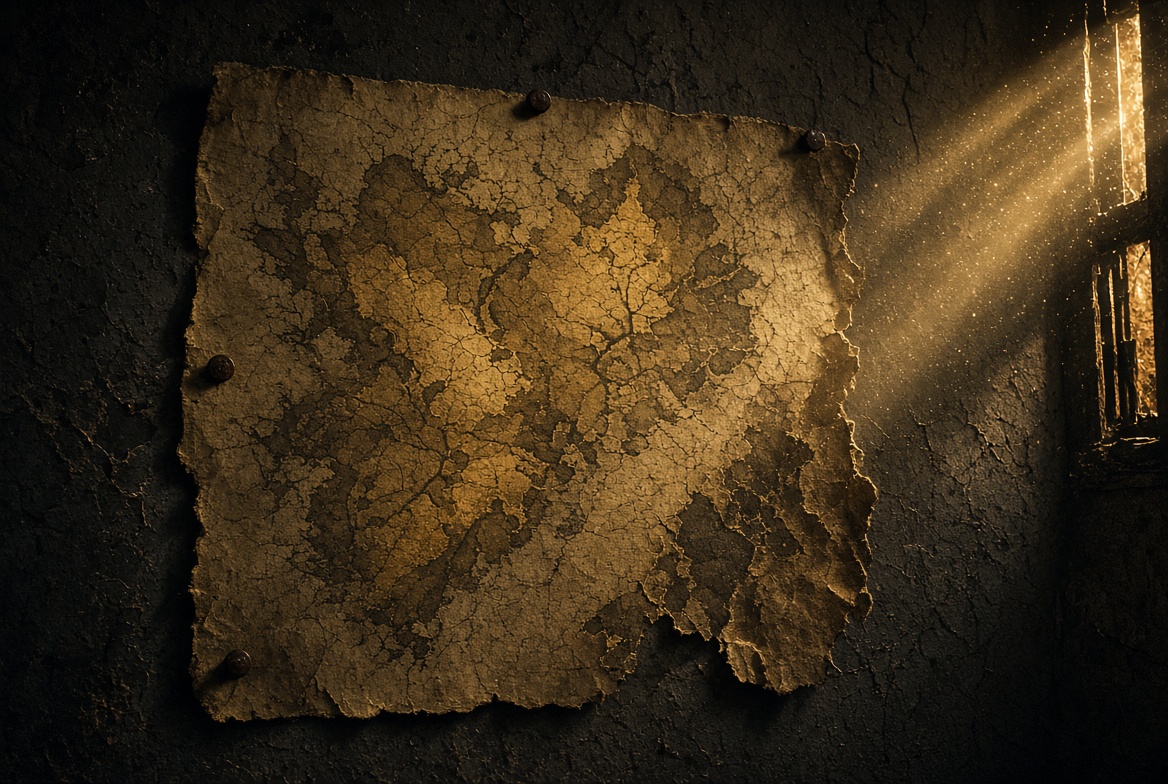
The screening
The picture is filed as Page Torn From the World.
Scenario
2:57 · 16:9
Blythe Orr mends books at a bench lit by a plain lamp. Thread, paste, and a bone folder sit in a row. The thread is already waxed. In her hands is a single page torn loose, print running to a ragged edge, the reverse still holding the deep crease of another volume. The crease is sharp enough to prove a gutter it no longer lives in. She does not have the world the page came from, and she does not invent one. She turns the page once, stair and bell on one side, the deep crease on the other, and turns it back.
She opens the book whose spine matches the crease's width. The cover boards agree with the bend. The signatures are tight. Where this page would have sat, the neighboring leaves talk about a harbor and a toll. The torn page talks about a stair and a bell. They do not continue each other. She reads both without supplying a sentence between them. She tries the page against the gutter anyway. The crease fits the bend. The paper seats as if it had been sewn there. The sentences refuse the join. Harbor stops. Stair starts. Nothing in the type crosses the gap. A toll and a bell do not become the same sound.
Her needle is threaded for the repair. The thread hangs. She sets the needle down. Completing the book would mean writing a bridge the paper does not own. She does not write one in the margin. She closes the harbor book, mended everywhere except at this absence, and lays the torn page beside it, crease up, still bent from the life it left. The bend does not relax. Paste skins over in its pot. A dull skin takes the surface. The lamp stays on the crease. The crease throws a small shadow that matches the book's closed spine and still does not make them one volume.
The torn page lies beside the closed book, its crease matched to a volume that does not continue it. Blythe's hands leave both. The needle stays threaded and unused. The bone folder stays in its place in the row. The lamp does not get moved to flatter the join. Harbor and toll remain inside the closed boards. Stair and bell remain outside them. The bench keeps the refusal as a physical fact: a fit of crease and a failure of sentences, side by side, with the paste already skinning over because the repair has stopped.
She does not open the book again to try a different signature. The ragged edge does not smooth itself. The lamp burns level on the crease. The page keeps the bend of a gutter it cannot reenter, and the closed book keeps a harbor that will not grow a stair to meet it.
The skinned paste does not get stirred back to use. Thread on the unused needle hangs still. Blythe stays at the bench with both objects in the lamp and does not force the stair to pay the toll.
Shooting script
Scene 1. Mending bench. Day. 2:57. 16:9.
One place. One hour. It stays one scene.
Blythe Orr tries a torn page against a book. The crease fits. The sentences stay apart. She sets the threaded needle down. Paste skins over. Page and book stay side by side.
No dialogue.
Breakdown
Day hour. Build the bench, the torn page, and the harbor book.
Cast. Blythe Orr, fifty-five, at the bench.
Bench. A mending bench under a plain lamp. Thread already waxed, a pot of paste, a bone folder, in a row.
Torn page. One loose page, print running to a ragged edge. Stair and bell on one side. A deep crease on the reverse. The bend stays.
Book. A book whose spine and cover boards match the crease. Inside, neighboring leaves carry a harbor and a toll. It closes with the absence left open.
Needle. A needle threaded for the repair. It hangs, then is set down unused. The thread stays still.
Paste. Paste that skins over in the pot because the repair stops.
Shot list
Camera. One scene. 16:9.
Nobody looks into the lens. The sizes below are the decoupage, not the literary script.
1 · 0:00–0:12 · Wide. A plain lamp lights a mending bench.
2 · 0:12–0:24 · Close. Waxed thread, paste, and a bone folder sit in a row.
3 · 0:24–0:36 · Medium. Blythe Orr holds a single torn page, print running to a ragged edge.
4 · 0:36–0:48 · Macro. The reverse shows a deep crease, sharp enough to prove an old gutter.
5 · 0:48–1:00 · Close. She turns the page. Stair and bell, then the crease, then back.
6 · 1:00–1:12 · Medium. She opens the volume whose spine agrees with the crease.
7 · 1:12–1:24 · Close. The book's leaves carry a harbor and a toll. The torn page carries a stair and a bell.
8 · 1:24–1:36 · Macro. She tries the page in the gutter. The crease fits. The sentences stay apart.
9 · 1:36–1:48 · Medium. A threaded needle hangs in her hand. She sets it down.
10 · 1:48–2:00 · Close. She closes the harbor book.
11 · 2:00–2:12 · Medium. The torn page lies beside it, crease up, still bent.
12 · 2:12–2:24 · Macro. Paste skins over in the pot.
13 · 2:24–2:36 · Close. The lamp remains aimed at the crease. A small shadow matches the closed spine.
14 · 2:36–2:48 · Medium. Her hands leave both the book and the page.
15 · 2:48–2:57 · Wide. Thread hangs still on the unused needle. Page and closed book stay side by side.
Lookbook
Plain lamp on the crease.
A plain lamp is the only light, and it stays on the crease. The torn page takes that light on the ragged edge and on the bend. When the harbor book closes, the crease throws a small shadow that matches the spine and still leaves them as two objects. The paste pot dulls as a skin forms, just at the edge of the lamp. Thread on the unused needle is a thin bright line in the same pool.
Palette
Lamp pool. #F3E0B8. The plain lamp on the bench
Page paper. #E7D3B0. The torn page, stair and bell
Crease shadow. #8A7358. The deep crease and its small shadow
Book boards. #6B3E32. The harbor book's cover
Type ink. #24262A. The print on page and leaves
Waxed thread. #D8C48A. The thread on the unused needle
Paste. #C8B48A. The pot as the surface skins
Bone folder. #E8DCC8. The bone folder in the row
Lens
Wide holds the bench and the lamp. Medium holds Blythe and the two texts. Close and macro hold the crease, the ragged edge, the fit in the gutter, the needle, and the skinned paste.
Costume
Mending cloth at a bench.
Blythe Orr is fifty-five. She wears a clay-colored work smock over a dark dress, sleeves back, cloth that expects paste and thread.
The repair stops before the paste is used, so the smock takes no fresh white. The bone folder stays in its row, not in a pocket.
Her hands leave the book and the page. The smock stays on her at the bench. No other worker's cloth enters.
Design
Bench, thread, and two texts.
A mending bench with a plain lamp, waxed thread, a paste pot, and a bone folder in a row. The tools have to be ready and then left unused.
A torn page shows stair and bell, a ragged edge, and a deep crease on the reverse. A book opens to a harbor and a toll, and its spine matches the crease. The page has to seat in the gutter and still read as the wrong text. Then the book closes and the page lies beside it, crease up, bend unrelaxed.
The needle is threaded and set down. The paste skins over. The lamp stays where it is, on the crease.
Makeup and hair
The refusal sits in the hands.
Blythe is fifty-five. Hair is pinned for close work under the lamp. Skin shows ordinary bench wear, no fresh paste on the fingers.
The hands hold the page, try it in the gutter, set the needle down, and leave both objects. That sequence is the whole of the body-story.
Her face reads the mismatch and stays quiet. No strain is painted as harm. The lamp warms the hands and the paper more than the cheeks.
Sound
No score. Paper, a needle set down, and a closing book.
Page. The torn page turns once and turns back.
Book. The harbor book opens, then closes.
Needle. The threaded needle is set down on the bench.
Paste. The pot stays quiet while a skin forms on the paste.
Lamp. The lamp burns with a steady low presence and is never moved.
Hands. Her hands leave the book and the page. The bench goes still.