Place Between Places
Key art
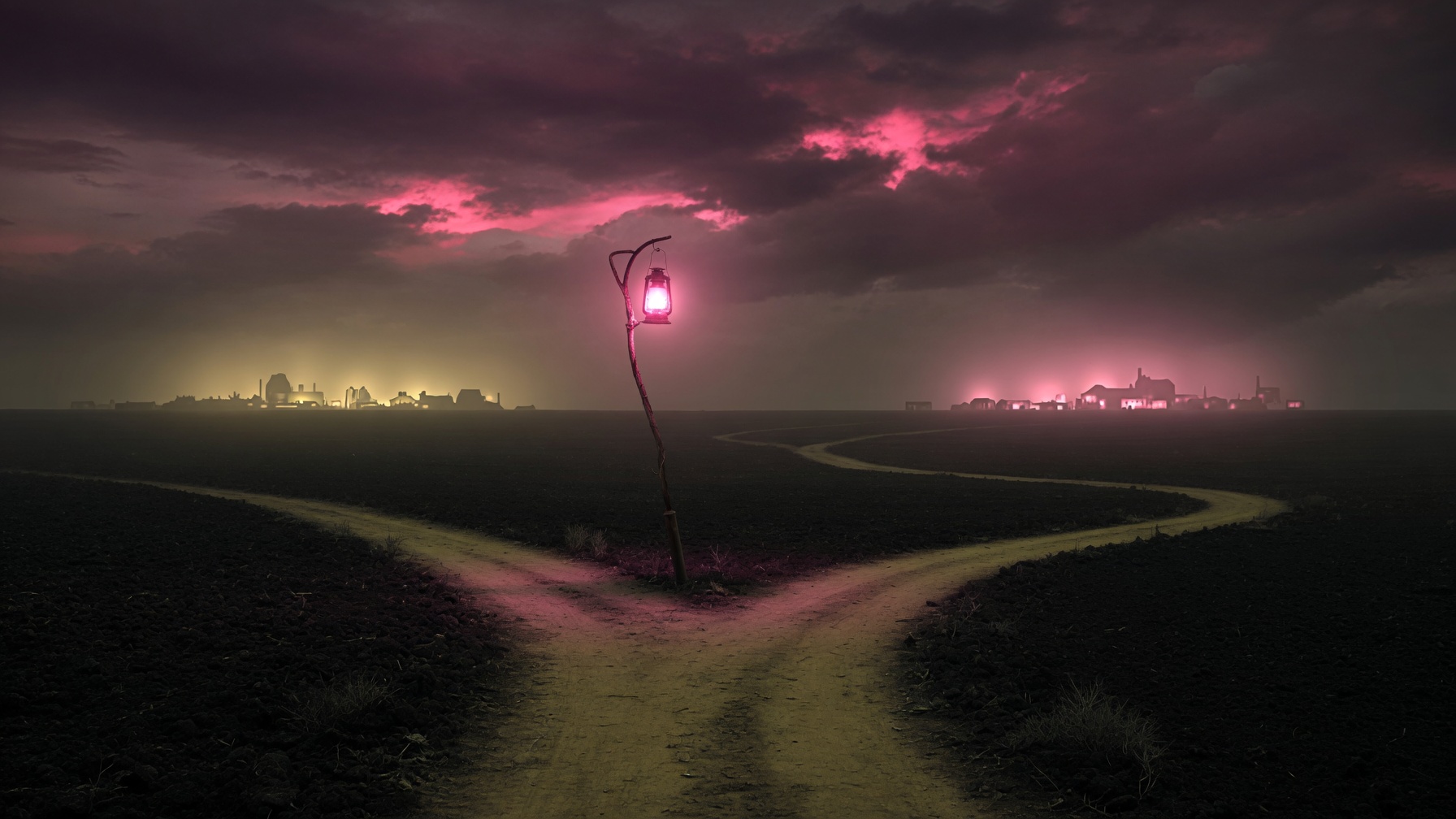
The screening
The picture is filed as Place Between Places.
Scenario
2:57 · 16:9
A strip of unnamed ground lies between two highways that belong to towns this place does not. Wind crosses it. Traffic sounds from both directions and never turns in. A horn on the far road is for someone else. Insects tick in the dry grass. A concrete shelter, little more than a roof on posts, stands beside a pylon and an abandoned kiosk with its shutter half down. The shutter is stuck at a slant. The kiosk proves that other people paused here. It does not say who, or that they founded anything. A paper cup under the counter has been there long enough to fade.
A man walks in off the nearer shoulder with a paper map folded to a blank. The blank is the side he chose to look at. He stops under the roof. Shade is immediate and thin. A radio on the kiosk counter, still plugged into nothing visible, plays two stations at once: a voice reading numbers, and a song in another language, neither winning. The cord ends in air. He turns the dial. For a moment one station comes clear, a woman naming a town he did not come from. The name is ordinary and not his. Then the second station floods back, and the name is lost under the song. He does not turn the dial again to rescue it. His hand leaves the knob. The two sounds resume their argument at the same volume.
He looks both ways. No sign offers him this ground as a destination. The pylon has a number and the number is not a place. He slides the map under a loose brick on the counter, a marker with no message, and steps out from the shelter. Sun hits his shoulders. The highways keep their separate noise. He walks the verge until he is small, and he does not arrive anywhere the eye can name. Dry grass closes behind his legs and does not show a path worth following back.
The radio goes on splitting itself under the roof, numbers under a song, song under numbers. The brick holds the map flat in the wind. A corner of the paper flutters and cannot escape. The kiosk shutter stays half down. Traffic does not turn in. The man becomes small on the unnamed strip and does not become a destination. The shelter keeps a radio no one is listening to and a blank map no one is reading, and the two highways continue to belong to other towns.
Insects keep ticking after he is small. The paper cup does not tip. The pylon's number does not become the name of the verge. Wind crosses the roof and does not choose a station. The brick and the map stay, and the ground between the roads stays a ground that does not receive him as a resident.
Shooting script
Scene 1. Verge between roads. Day. 2:57. 16:9.
One place. One hour. It stays one scene.
A man stops at a shelter between two highways, turns a radio, and leaves a blank map under a brick. He walks the verge until he is small. The radio keeps splitting a voice and a song.
A woman on the radio names a town. The line is spoken and never subtitled.
Breakdown
Day hour. Build the shelter, the split radio, and the blank map.
Cast. A man, forty-four, walking in off the nearer shoulder and out again until he is small.
Shelter. A concrete roof on posts, thin shade, beside a pylon whose number is not a place.
Kiosk. An abandoned kiosk, shutter stuck half down at a slant. A faded paper cup under the counter. A radio still playing, cord ending in air.
Radio. Two stations at once: a voice reading numbers, and a song in another language. One turn of the dial clears a woman naming a town, then the song floods back.
Map and brick. A paper map folded to a blank. A loose brick on the counter that holds it. A corner can flutter and stay trapped.
Verge. Dry grass, wind, insects. Two highways with traffic that stays on the roads. One far horn.
Shot list
Camera. One scene. 16:9.
Nobody looks into the lens. The sizes below are the decoupage, not the literary script.
1 · 0:00–0:12 · Wide. A strip of dry grass lies between two highways. Wind crosses it.
2 · 0:12–0:24 · Medium. A concrete shelter stands by a pylon and a kiosk with a half-down shutter.
3 · 0:24–0:36 · Close. A faded paper cup sits under the kiosk counter.
4 · 0:36–0:48 · Medium. A man walks in off the nearer shoulder with a map folded to a blank.
5 · 0:48–1:00 · Wide. He stops under the roof. Thin shade hits him at once.
6 · 1:00–1:12 · Close. A radio with a cord ending in air plays numbers and a song together.
7 · 1:12–1:24 · Macro. He turns the dial. One station clears. A woman names a town.
8 · 1:24–1:36 · Close. The song floods back over the name. His hand leaves the knob.
9 · 1:36–1:48 · Medium. He looks both ways. The pylon carries a number and no place.
10 · 1:48–2:00 · Close. He slides the blank map under a loose brick on the counter.
11 · 2:00–2:12 · Wide. He steps out. Sun hits his shoulders.
12 · 2:12–2:24 · Medium. He walks the verge until he is small. Dry grass closes behind his legs.
13 · 2:24–2:36 · Close. Under the roof the radio keeps splitting numbers and song.
14 · 2:36–2:48 · Macro. A corner of the map flutters under the brick and stays.
15 · 2:48–2:57 · Wide. Traffic keeps to the highways. The shelter keeps the radio, the brick, and the map.
Lookbook
Thin shade, then open sun.
Day on the verge is open and hard. Under the concrete roof the shade is immediate and thin, enough to dull his shoulders and the kiosk counter. The radio sits in that shade, cord ending in bright air at the edge. When he steps out, sun hits the jacket. The highways stay in their own glare. The blank map under the brick takes a little flutter of the same sun and stays held.
Palette
Dry grass. #B7A06A. The unnamed strip between the roads
Concrete shade. #A8A49C. The thin shade under the roof
Highway. #4E5458. The two roads and their traffic
Kiosk shutter. #6E5840. The half-down shutter
Paper cup. #D9D2C4. The faded cup under the counter
Map paper. #EFE6D4. The blank side of the map under the brick
Brick. #8C4A3A. The loose brick that holds the map
Jacket sun. #C47A42. Sun on his jacket once he steps out
Lens
Wide holds the verge, the two highways, and the shelter. Medium holds the man under the roof and walking away. Close and macro hold the radio dial, the blank map, the brick, and the faded cup.
Costume
A jacket between roads.
The man is forty-four. He wears a worn tan jacket, a plain shirt, and trousers dull with road dust. The cloth is for walking, not for arrival.
Under the roof the shade dulls the jacket. When he steps out, sun hits the shoulders and the tan goes warmer. That is the only change in the clothes.
He becomes small on the verge in the same jacket. No second coat is left at the kiosk. The map stays, the man keeps his cloth.
Design
Shelter, kiosk, and pylon.
A strip of dry grass between two highways, with wind and insects. A concrete roof on posts gives thin shade. A pylon carries a number that is not a place-name. Traffic stays on the roads.
An abandoned kiosk has a shutter stuck half down. A faded paper cup sits under the counter. A radio plays though its cord ends in air: two stations at once, numbers and a song, with one clear moment of a woman naming a town.
A paper map folded to a blank slides under a loose brick and flutters at a corner without escaping. The man has to be able to walk until he is small, grass closing behind him.
Makeup and hair
Sun sits on the shoulders.
He is forty-four, with short hair and day-worn skin. Under the shade the face is flat and plain. In the sun the brow and nose take a harder light.
His hand turns the dial once and leaves it. The fingers stay dusty only in an ordinary way. No new grit is added for drama.
He looks both ways, then walks. The body gets smaller in the frame. Breath stays ordinary. No one else is on the verge to paint.
Sound
No score. Wind, traffic, insects, and a split radio.
Wind. Wind crosses the verge and the roof for the whole hour and never picks a station.
Traffic. Traffic sounds from both highways and stays on those roads.
Horn. A horn on the far road is for someone else, once.
Insects. Insects tick in the dry grass, and they keep ticking after he is small.
Numbers. A voice on the radio reads numbers. The words are spoken and never subtitled.
Song. A song in another language shares the speaker and usually covers the numbers.
Town. One turn of the dial lets a woman name a town, clear and ordinary, then the song floods back. The name is spoken and never subtitled.
Map. A paper corner flutters under the brick and stays trapped.