Step Into the Unlit
Key art
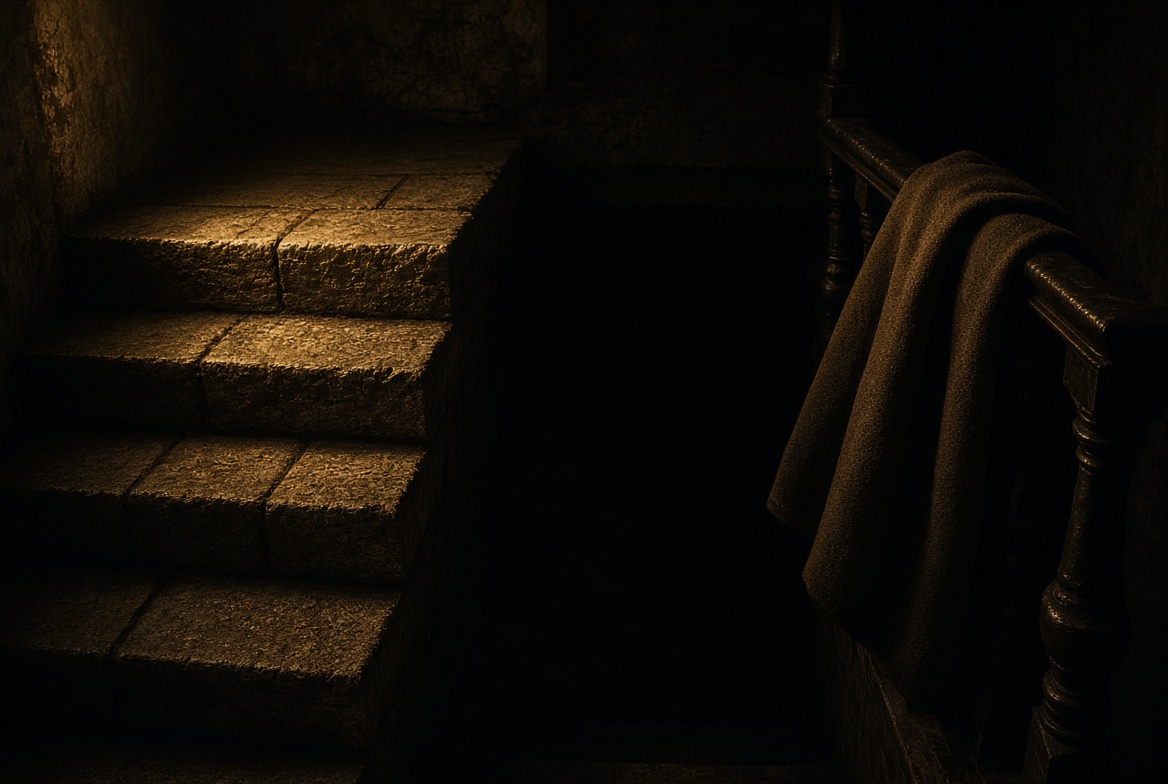
The screening
The picture is filed as Step Into the Unlit.
Scenario
2:57 · 16:9
Elias Penn keeps the first unlit step and not the corridor after it. The lit room behind him has a lamp, a chair, and a handled door standing open. Beyond the threshold the stair drops into dark. He can hear the corridor only as air. He does not go find its end. The step is enough. The lamp throws his shadow across the sill and stops it there, because the dark takes the rest. The chair behind him stays empty. He does not sit back down to delay the step he has already chosen.
He stands with his hand not yet on the handle. The open door moves a finger in a draft from below and comes back. The first step's nosing is bright. The tread below the nosing is already dim. Minutes pass as that boundary holding still, and as his breath, and as no switch being found because he does not hunt for one. The corridor offers him air and nothing shaped like a voice. He does not answer it. The lamp hums. The chair does not creak, because he is not in it.
He puts his hand on the handle, not to shut the door and not to make a speech of leaving. He uses it for balance. His boot finds the first step down, the one where the lamp still reaches the nosing and fails on the tread. Wood takes his weight. The second step is a guess of darkness, and he does not offer it his other foot. That foot stays on the lit sill, heel bright, toe already in the dim. The handle is warm where his palm has been, and then the warmth is only metal cooling back.
The lamp behind him dips, a small tiredness in the bulb, and the bright nosing retreats a finger's width toward the sill. His boot on the dark tread does not follow the light back. The dip ends. The nosing brightens again to the old line, just short of the place his sole has claimed. That retreat and return follows the step and does not cancel it. He does not bring the second foot down. He does not pull the first foot up. The lamp does not dip again. His coat hem settles. The dark on the second tread stays dark.
He breathes once at that size of journey. The corridor does not get him. He does not reach for a switch, and he does not retreat all the way into the chair. The first unlit step holds him. The handle warms under his hand and then is only metal. The chair's cushion keeps the dent it had before he stood. The open door stays open. Air from below moves the hem of his coat and leaves the hem.
Elias's boot stays on the first dark step. The lit room remains behind his heel. The nosing keeps its recovered line of light, and the second step stays a guess he does not spend.
Shooting script
Scene 1. Lit room at a stair. Night. 2:57. 16:9.
One place. One hour. It stays one scene.
Elias Penn, forty-four, puts one boot on the first dark step and leaves the other on the lit sill.
No dialogue.
Breakdown
Night hour. Lamp, open door, and the first dark step.
Cast. Elias Penn, man, forty-four. Standing. The chair behind him stays empty. No one else.
Lamp. A lamp in the lit room. It throws his shadow to the sill and stops it there. It dips once, a small tiredness in the bulb, then the nosing brightens back to the old line. It dips only once.
Door. A handled door standing open. It moves a finger in a draft from below and comes back. It stays open. The handle warms under his palm and cools back to metal.
Stair. The first step, nosing bright, tread already dim. The second tread stays dark. One boot on the first dark step, the other foot on the lit sill, heel bright and toe in the dim.
Chair. An empty chair. The cushion keeps the dent it had before he stood. It never creaks, because he is not in it.
Coat. A coat whose hem the air from below can move and leave.
Shot list
Camera. One scene. 16:9.
Nobody looks into the lens. The sizes below are the decoupage, not the literary script.
1 · 0:00–0:12 · Wide. Elias stands in the lit room, lamp and empty chair behind him, open door onto a dark stair.
2 · 0:12–0:24 · Medium. His shadow crosses the sill and stops where the dark takes the rest.
3 · 0:24–0:37 · Close. His hand is still off the handle while the door moves a finger in the draft and comes back.
4 · 0:37–0:49 · Medium. The first nosing is bright, and the tread below it is already dim.
5 · 0:49–1:02 · Close. His palm takes the handle for balance.
6 · 1:02–1:14 · Medium. One boot finds the first step, lamp still on the nosing and gone from the tread.
7 · 1:14–1:27 · Close. The other foot stays on the lit sill, heel bright, toe already in the dim.
8 · 1:27–1:39 · Macro. Warmth in the handle fades back until it is only metal.
9 · 1:39–1:52 · Medium. The lamp dips, and the bright nosing retreats a finger's width toward the sill.
10 · 1:52–2:04 · Close. The boot on the dark tread stays where it is.
11 · 2:04–2:17 · Medium. The dip ends, and the nosing brightens again to the old line, just short of his sole.
12 · 2:17–2:31 · Close. Air from below moves the coat hem, and the hem settles.
13 · 2:31–2:44 · Medium. He breathes once there, the chair cushion still dented, the door still open.
14 · 2:44–2:57 · Wide. His boot stays on the first dark step, the lit room remaining behind his heel.
Lookbook
Lamp stopped at the sill
The lamp in the room throws his shadow across the sill and loses it where the stair goes dark. The first nosing stays bright, and the tread under it is already dim. When the bulb dips, that bright line retreats a finger toward the sill, then comes back to the old mark, just short of the sole that has claimed the dark step. The handle takes a little warmth from his palm and gives it up.
Palette
Lamp. #E2B15A. Lamp in the room behind him
Lit sill. #E6D3A8. Sill and the bright heel
Nosing. #C8B48A. First step's bright nosing
Dark tread. #2A2624. Tread the lamp fails on, and the second step
Door wood. #6E4E34. Open door and the handle
Chair. #5C4638. Empty chair and the old dent in the cushion
Coat. #343A44. Coat and the hem the draft moves
His shadow. #1A1816. Shadow stopped at the sill
Lens
Wide holds the lit room, the open door, and the first steps. Close and macro hold the handle, the nosing, the boot, and the hem.
Costume
A coat for one step down
Elias Penn is forty-four. He wears a dark coat over a muted shirt and trousers, dressed to leave and stopped on the first step.
Air from below moves the hem and leaves it. The coat settles. Nothing tears, and he never sheds it to sit again. The chair keeps only the dent from before he stood.
Design
Lit room, open door, two treads
The set is one lit room with a lamp, an empty chair, and a handled door standing open on a stair. Beyond the first step the stair is dark. The corridor is air only.
The lamp must reach the nosing and fail on the tread, dip once, and recover to the old line. The door moves a finger in a draft and stays open. The handle warms and cools. One boot stays on the dark step and the other on the sill. The cushion keeps its old dent.
Makeup and hair
A face between lamp and dark
Elias is forty-four. Skin is fair, hair brown and short, face half in the lamp and half toward the dark stair. No paint beyond a natural finish.
One palm warms the handle and leaves that warmth in the metal. The other arm stays at his side. Breath shows once at the size of the step. Hands and face take no scrape from the wood.
Sound
No score. A lamp hum, a draft, and one boot on wood.
Lamp. The lamp hums in the room and dips once, a small tiredness, then holds.
Door. The open door moves a finger in the draft and comes back, a soft wood shift.
No voice. The corridor offers air and nothing shaped like a voice. He gives it no answer.
Boot. Wood takes his weight on the first step, one firm sound, and the second step stays untested.
Handle. The handle is quiet under the palm. Warmth leaves it with no tick.
Hem. Air from below moves the coat hem and leaves it, a cloth brush.
Chair. The empty chair never creaks.
Breath. He breathes once at that size of journey, and the stair gives nothing back.