The Afternoon That Stayed
Key art
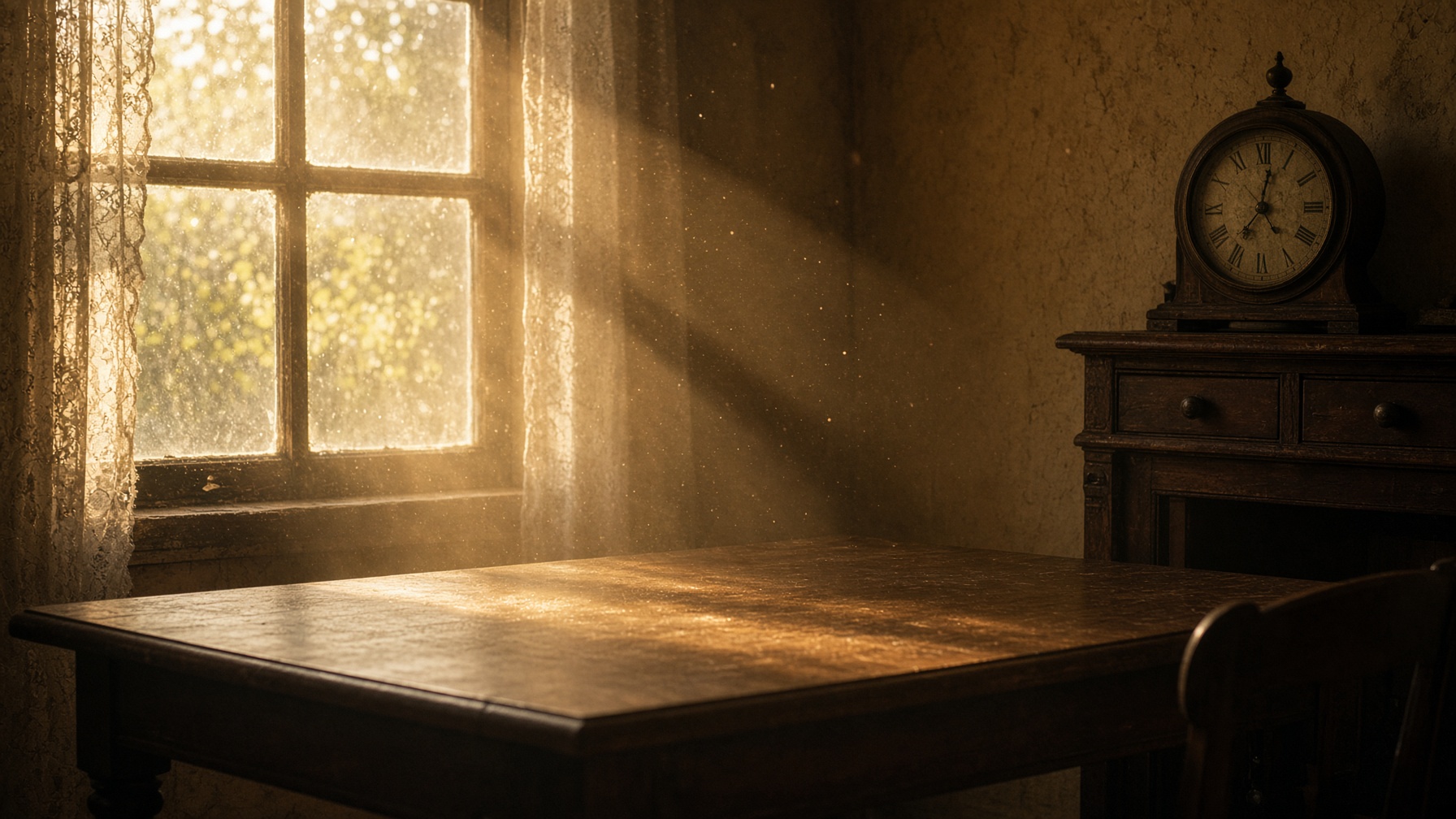
The screening
The picture is filed as The Afternoon That Stayed.
Scenario
2:57 · 16:9
Silas Reed tunes a piano in a house that no longer hosts concerts. The lid is up. His fork and his wrench are laid on the felt. Afternoon comes in as a gold bar across the floorboards and stops there, in no hurry to become evening. He plays one string, listens, and plays it again. The pitch is a small living thing. He is used to hearing linger in these instruments, the way a note refuses to die on schedule. Today he turns the same ear toward the daylight.
The room holds stacked chairs and a bench pulled out only far enough for his work. Dust lies along the fallboard. The gold on the floor has a hard edge where the window's shadow ends, and that edge does not creep. He tightens the pin a fraction, strikes the string, and waits for the beat against the fork. The beat slows. Minutes pass as that slowing and as the gold refusing to lengthen. No one comes to the door to ask for a song. He does not arrange music on the rack. The rack is empty.
He tightens the string until it sits where he wants it, then stops with the wrench still fitted. The gold on the floor has a tone of its own, a steady warmth without a melody he is obliged to chase. Waiting, in this room, is his work, not a delay before an audience arrives. He does not arrange the bench for a player who is not coming. He sits on it sideways, wrench in his lap, and listens to the room hold the note he just made.
The string decays. The light does not. He lifts the wrench off the pin so he will not fidget the tuning out of truth. Dust moves slowly in the gold. Somewhere in the house a clock marks an hour that the afternoon declines to obey. After the decay should be silence, the same string sounds once, faint, with no hand on it and no hammer he can see lifted. The sound is shorter than a note he would accept in a tuning, and it dies cleanly. He does not put the wrench back. The gold does not brighten to match the sound. It keeps the brightness it had.
The open piano holds the last tuned string in silence. The gold remains on the floorboards, and Silas stays seated inside the hour that would not move on. The fork on the felt does not ring again. Dust in the gold settles the rest of the way, and the hard edge of the light stays where the afternoon put it.
The house beyond the music room offers one more tick of the clock and then a long quiet. Silas does not go to the clock to correct it. The string he woke by accident stays quiet after that single faint voice. The bench holds him sideways. The open lid shows the tuned pin and the pins he did not touch, and the gold on the boards refuses to become evening while he is still sitting in it.
Shooting script
Scene 1. Unused music room. Day. 2:57. 16:9.
One place. One hour. It stays one scene.
Silas Reed, fifty-eight, tunes one piano string and stays seated while a gold bar of afternoon refuses to lengthen.
No dialogue.
Breakdown
Day hour. An open piano, a fork, and a gold bar.
Cast. Silas Reed, man, fifty-eight. Alone. No one comes to the door. He sits the bench sideways and stays.
Piano. Lid up. One string he plays, tightens, and hears decay. After the decay it sounds once more, faint, with no hand and no hammer lifted. The tuned pin and the untouched pins stay visible. The rack is empty.
Tools. A fork and a wrench laid on the felt. The wrench fits the pin, then rests in his lap, and is left off the pin. The fork beats against the string, slows, and never rings again.
Light. Afternoon as a gold bar across the floorboards with a hard edge that never creeps and never becomes evening. Dust moves in it, then settles.
Room. Stacked chairs. A bench pulled out only far enough for the work. Dust along the fallboard. Somewhere in the house a clock marks an hour the afternoon declines, then one more tick, then a long quiet.
Shot list
Camera. One scene. 16:9.
Nobody looks into the lens. The sizes below are the decoupage, not the literary script.
1 · 0:00–0:12 · Wide. Silas stands at an open piano in an unused room, fork and wrench on the felt, a gold bar lying hard across the floorboards.
2 · 0:12–0:24 · Medium. Stacked chairs fill the side, and the bench is pulled out only far enough for the work.
3 · 0:24–0:37 · Close. He strikes one string, listens, and strikes it again.
4 · 0:37–0:49 · Wide. The gold on the floor keeps a hard edge and stays the length it had.
5 · 0:49–1:02 · Close. He tightens the pin a fraction and waits on the beat against the fork.
6 · 1:02–1:14 · Macro. The beat slows.
7 · 1:14–1:27 · Close. The string sits where he wants it, the wrench still fitted.
8 · 1:27–1:39 · Medium. He sits the bench sideways, wrench in his lap, and listens to the room hold the note.
9 · 1:39–1:52 · Close. The string decays while the gold on the boards stays.
10 · 1:52–2:04 · Medium. He lifts the wrench off the pin.
11 · 2:04–2:17 · Macro. Dust moves slowly inside the gold bar.
12 · 2:17–2:31 · Close. After the decay the same string sounds once, faint, with no hand and no lifted hammer.
13 · 2:31–2:44 · Medium. The fork on the felt stays quiet, and the dust in the gold finishes settling.
14 · 2:44–2:57 · Wide. Silas remains seated sideways, the open lid showing the tuned pin, the gold still refusing evening.
Lookbook
A gold bar that stays
Afternoon enters as a gold bar across the floorboards and stops, its edge hard where the window shadow ends. That edge never creeps. The open piano and the felt sit in the room's quieter daylight, while the gold holds a steady warmth with no melody of its own. Dust drifts in the bar and then settles. The faint late sound from the string earns no extra brightness from the floor.
Palette
Gold bar. #E2C078. Afternoon on the floorboards, hard-edged
Floorboards. #A8845A. Boards under the gold and beyond the shadow
Piano black. #2A2C2E. Open piano and the raised lid
Felt. #8A3A3A. Felt where the fork and wrench are laid
String. #C8C2B4. The string he tunes
Fork. #C0C4C6. Tuning fork on the felt
Wrench. #6A7074. Wrench on the pin, then in his lap
Stacked chairs. #6E5438. Chairs along the side of the room
Lens
Wide holds the music room, the open piano, and the gold bar on the floor. Close and macro hold the string, the pin, the fork, and the wrench.
Costume
Work clothes for a tuner who stays
Silas Reed is fifty-eight. He wears a faded brown work shirt and dark trousers, cloth for kneeling at a piano and then sitting sideways.
Dust from the fallboard stays on the instrument, not on the shirt. He never puts on a concert jacket, and the bench is never turned out for a player who is absent. The shirt is the same when the gold is still there.
Design
Open piano, felt tools, a stalled gold bar
The room is an unused music room: lid up, empty rack, stacked chairs, a bench pulled out only for the work, dust on the fallboard. Afternoon is a gold bar with a hard edge that must hold still.
The fork and wrench start on the felt. One string has to take a tuning, decay, and sound once more with no hand and no visible hammer. The wrench ends off the pin, in the lap, and stays off. A house clock is heard, not shown, and it is left uncorrected.
Makeup and hair
An ear toward the string and the day
Silas is fifty-eight. Skin is fair and lined, hair grey and short, face turned to the string and then toward the gold on the floor. No paint beyond a natural finish.
His hands use the wrench and then rest it in the lap so the fingers stay off the pin. Nothing on the skin is marked by the string or the dust. The listening face stays quiet.
Sound
No score. One piano string, a tuning fork, and a house clock.
String. He strikes one string, listens, and strikes it again. The pitch is small and living.
Fork. The beat against the fork slows as the pin comes in, then the fork stays quiet on the felt.
Decay. The tuned string decays. He lifts the wrench so a fidget never walks the tuning off.
Room. He listens to the room hold the note. No one comes to the door to ask for a song.
Clock. Somewhere in the house a clock marks an hour the afternoon declines to obey.
Unbidden. After the decay, the same string sounds once, faint, shorter than a tuning note, with no hand and no hammer he can see, and it dies cleanly.
Dust. Dust in the gold settles with no sound of its own.
Last tick. The house offers one more clock tick and then a long quiet. Silas leaves the clock alone.