The Door and the Decision
Key art
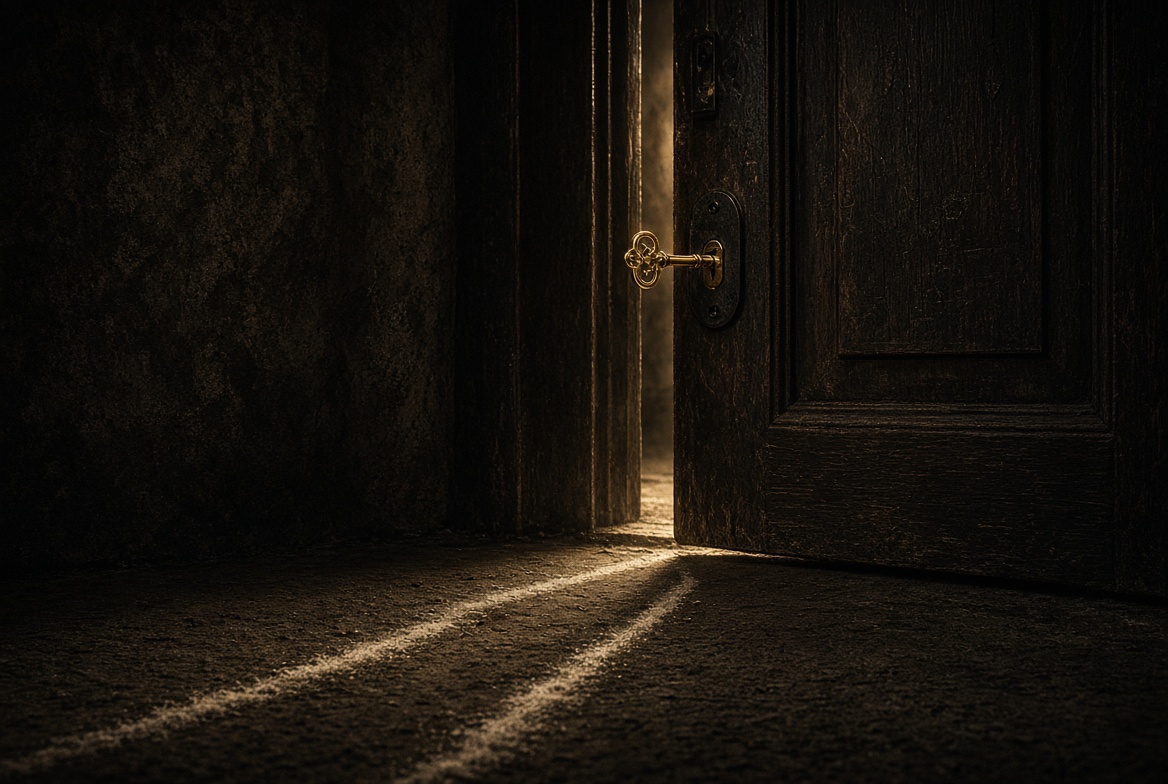
The screening
The picture is filed as The Door and the Decision.
Scenario
2:57 · 16:9
Tobias Keen repairs doors. This one sticks at the head, the handle loose, the threshold worn to a pale groove. The decision is not the crossing. He stays on the near side with his tools and treats the door as the object, not as an invitation. Shavings from an earlier pass lie on the near boards. The far side is painted wood and a rumor of a room. He does not put an eye to the gap. He sets his plane where his hand expects it.
He works the loose handle first, because a handle can be square without being used. The spindle takes the turn. Minutes pass as that small tightening, metal seating, and as the door still sticking at the head so he will have to plane it. He does not open it far enough to pass through. He opens it a finger, feels the rub, and lets it come back. The pale groove in the threshold keeps the record of older crossings. His boots stay off it.
He tightens the handle until it sits square. He planes a shining inch off the top edge, blows the dust clear, and tests the swing with two fingers. The door travels and returns. It will open now for anyone. He does not become that anyone. Dust from the plane drifts, hangs, and settles back into the pale groove, a light new coat on the old record. He does not sweep it out. The settling follows the repair. The handle, square, eases a degree under its own weight and stays square. He takes his hand off it so the easing can be the door's and not his fidget.
He sets the handle level and leaves it. For a moment the repaired door is a choice standing in wood: capable, unforced. He hangs his plane on its peg. He coils the spare screws into their tin. The threshold keeps its groove, the record of older crossings he is not adding to. His boots stay on the near boards. The door, tested, stays closed after the test. The shining inch along the top edge catches the workroom light and does not become a path.
He looks at the handle the way a maker looks at a finished joint. The far side remains a rumor behind painted wood. The decision is the repair left unused. The repaired handle rests level in the door. Tobias leaves it closed.
Dust in the old groove stays where it settled. The plane hangs on its peg. He remains on the near boards, and the door that can swing does not swing again while he is there to see it.
The tin of spare screws sits shut on the bench. Tobias wipes his hands on a cloth and hangs the cloth, the way he hangs a tool he is finished with. The door's top edge keeps the shine of the inch he took off. No draft from the far side pushes the wood. The handle stays level, neither sagging further nor inviting a second test. He remains with his boots on the near boards, the pale groove in front of him newly dusted and still a record of other people's crossings, not of this hour.
Shooting script
Scene 1. Workroom. Day. 2:57. 16:9.
One place. One hour. It stays one scene.
Tobias Keen, fifty-eight, squares a loose handle and planes a sticking door, and the door that can swing stays closed on the near side.
No dialogue.
Breakdown
Day hour. A handle, a plane, and a shut door.
Cast. Tobias Keen, man, 58. Alone on the near side.
Door. Sticks at the head, handle loose, threshold worn to a pale groove. Painted wood on the far side. A shining inch planed off the top edge. It must travel and return, then stay closed.
Tools. A plane he sets where his hand expects it, then hangs on its peg. A spindle. Spare screws coiled into a tin. A cloth he wipes on and hangs.
Shavings and dust. Shavings from an earlier pass on the near boards. Fresh dust that hangs and settles into the pale groove.
Threshold. A pale groove, the record of older crossings. His boots stay off it. New dust coats it and stays.
Bench. The tin of spare screws sits shut. No draft from the far side moves the wood.
Shot list
Camera. One scene. 16:9.
Nobody looks into the lens. The sizes below are the decoupage, not the literary script.
1 · 0:00–0:11 · Wide. In the workroom day, Tobias Keen stays on the near side of a sticking door, tools out, shavings on the near boards.
2 · 0:11–0:22 · Close. The handle is loose, the threshold is worn to a pale groove, and the far side is painted wood.
3 · 0:22–0:34 · Medium. He works the handle first, the spindle takes the turn, and his boots stay off the groove.
4 · 0:34–0:46 · Close. He opens the door a finger, feels the rub, and lets it come back.
5 · 0:46–0:58 · Medium. He tightens the handle until it sits square and planes a shining inch off the top edge.
6 · 0:58–1:10 · Macro. He blows the dust clear, and the dust hangs and settles back into the pale groove.
7 · 1:10–1:22 · Close. Two fingers test the swing, and the door travels and returns.
8 · 1:22–1:34 · Medium. The square handle eases a degree under its own weight and stays square, and he takes his hand off it.
9 · 1:34–1:46 · Wide. He hangs the plane on its peg and coils the spare screws into their tin.
10 · 1:46–1:58 · Close. The shining inch along the top edge catches the workroom light, and the door stays closed after the test.
11 · 1:58–2:10 · Medium. He wipes his hands on a cloth and hangs the cloth, and the tin sits shut on the bench.
12 · 2:10–2:24 · Close. No draft from the far side pushes the wood, and the handle stays level.
13 · 2:24–2:40 · Medium. His boots remain on the near boards, and the groove holds its new dust on the old record.
14 · 2:40–2:57 · Wide. The repaired door stays closed, the plane hangs on its peg, and he remains on the near side.
Lookbook
Workroom day on painted wood
Day in the workroom falls on the near boards and on the painted far side of the door. The fresh plane cut is a shining inch along the top edge, and that shine is the brightest thing in the room. Dust from the cut hangs in the same light and settles into the pale groove. The handle, once square, sits level and takes a quieter share of the day. No draft from the far side moves the wood or the light.
Palette
Painted door. #6E5438. The door leaf and the far side.
Shining inch. #E2C48A. Fresh planed edge at the head.
Pale groove. #D8D0C2. Worn threshold with new dust.
Near boards. #8B6A48. Floor where his boots stay.
Plane steel. #A8A49C. The plane on its peg.
Handle. #4A4038. The squared handle.
Work cloth. #3E4A44. His shirt and the hung wipe.
Shavings. #C4A574. Curls from the earlier pass.
Lens
Wide holds the workroom and the near side of the door. Close and macro hold the handle, the shining inch, and the dust in the groove. Medium holds Tobias and the tools on the bench.
Costume
Work clothes that stay on the near side
Tobias Keen is fifty-eight. He wears a work shirt and trousers and boots that stay on the near boards, off the pale groove. The shirt is for a handle and a plane, not for a crossing.
He wipes his hands on a cloth and hangs the cloth the way he hangs a finished tool. Dust may dull the cuffs. Nothing else changes. He never becomes the person the repaired door could open for. No one comes through from the far side.
Design
A door treated as the object
The set is a workroom with one door that sticks at the head. The handle is loose and must end square and level. The top edge takes a shining inch from the plane. The door must open a finger, then swing on a two-finger test, travel, return, and stay closed. The far side is painted wood and only a rumor of a room.
Curls from an earlier pass sit on the near boards. Fresh dust must hang and settle into the pale threshold groove. The plane hangs on a peg. Spare screws go into a tin that shuts. A cloth hangs. No draft from the far side pushes the leaf.
Makeup and hair
Hands that finish and leave the handle
Tobias is fifty-eight. The face is a maker's face, looking at a joint. Hair is practical. The story sits in the hands: they tighten, plane, blow dust, test with two fingers, and then leave the handle.
He wipes the hands and hangs the cloth. No cut is staged, and no blood is added. Boots and posture keep him on the near side. The pale groove is wood, not a mark on skin.
Sound
No score. A spindle, a plane, and a returning door.
Handle. Metal seating as the spindle takes the turn and the handle goes square.
Finger. The door opens a finger, rubs, and comes back.
Plane. A short stroke takes a shining inch off the head.
Dust. He blows the dust clear. It is a breath, then a settle.
Test. Two fingers send the door and it returns.
Ease. The handle eases a degree under its own weight, a tiny tick, and stays square.
Peg and tin. The plane meets the peg. Screws coil into the tin. The cloth is hung. Then quiet.