The Locked Gallery
Key art
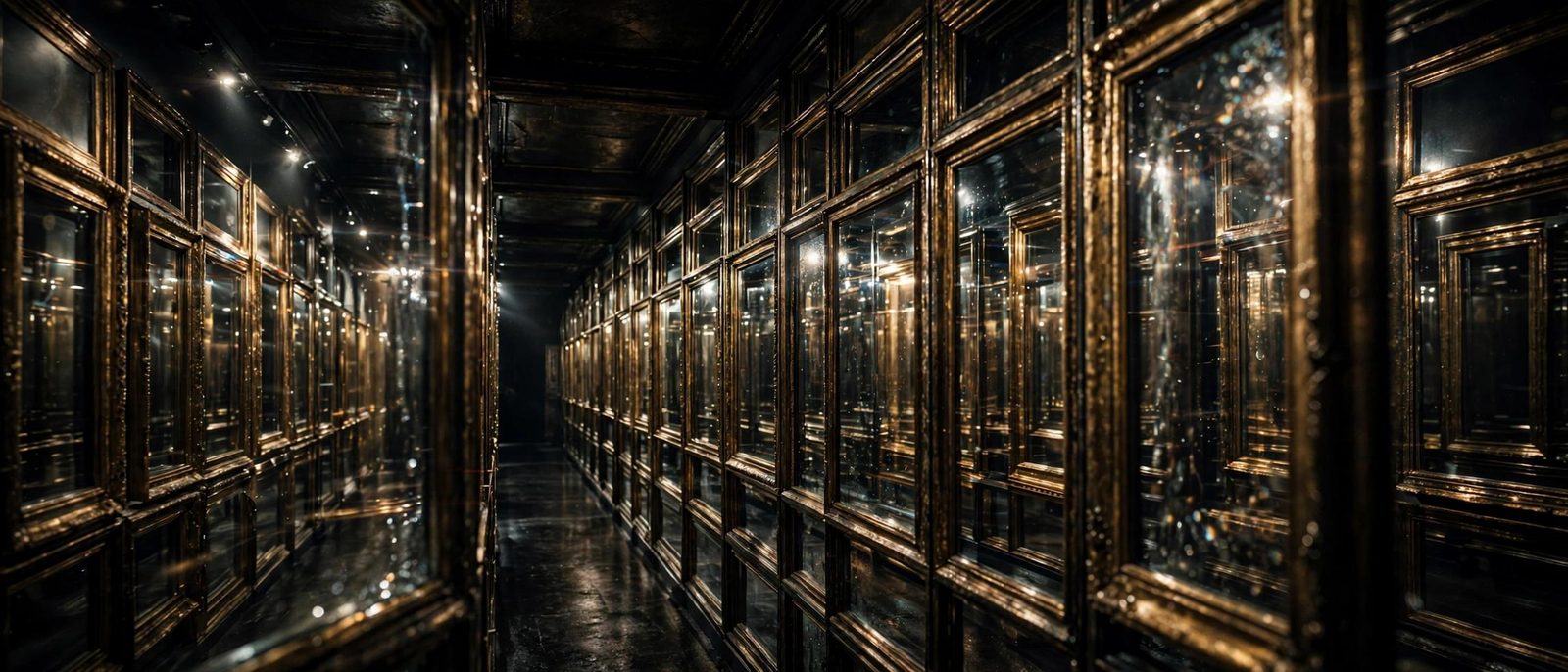
The screening
The picture is filed as The Locked Gallery.
Scenario
2:57 · 16:9
Gilt borders repeat down a corridor until the aisle has no end in sight. Glass covers every painting. The gold is the same at the first border and at the tenth, and the tenth is already small with distance. Two men walk the centre line. In the glass their reflections hold different stances: one a step behind his body, one turned aside, shoulder to the aisle while his shoes face forward. Their shoes sound once and the echo answers twice. The second echo arrives late, from a stretch the first echo did not use.
They pass a painting of a stair and a painting of a bare table. In both glasses the delayed reflection keeps the earlier step. The man whose glass turns him aside slows, and the turned reflection slows a moment after. The other man watches the borders. They do not stop repeating. A nick in one gilt corner catches the light and lets it go. Farther on, the same nick appears in the next border, then the next, smaller each time.
They stop where an enormous gilt border holds no canvas. The lower edge is thick enough to step over. The gallery continues inside it, the same aisle, smaller, then smaller again, until the borders become a grain that can still be followed. No painting hangs in that depth. Only the aisle, reduced. One man leans close to a painting of a bare room beside the empty border. The painted room has one chair and a shut door. His breath fogs the glass. The fog spreads, holds, and thins. The reflection in that fog does not breathe. Its mouth stays closed while his stays open. When the fog clears, the unbreathing face is still a step behind him, upright and dry.
The other man reaches a mechanical chest at the end of the hall. Papers wait on the lid, edges aligned. He lifts the lid. The hinge ticks twice, in the same doubled way as the shoes. More papers lie inside, drawings of the aisle, borders numbered in a hand that matches neither man. He turns one sheet, then another. The newest sheet already shows the first man standing within the enormous border, though that man has not stepped yet. The drawing includes the fogged glass and the chair. A lower sheet is still blank at the far end of its aisle.
The first man steps over the lower gilt edge. His shoe finds a floor that looks like the corridor and sounds thinner. His reflection stays outside, upright, in the stance he has left. He takes a second step. The reflection does not follow that one either. Farther down the repeating corridor a hooded figure walks away and does not grow smaller. The hood keeps the same size at ten paces and at thirty.
The chest remains open. Paper settles against paper and then is quiet. The blank far end of the lower sheet darkens, a small hood appearing at the size it already has, not reduced by the drawn distance. The page accepts the figure that will not shrink. The top sheet lifts in no draft and settles, inked with both men where they stand now, one inside the gilt, one at the chest.
The first man does not step back. The second does not close the lid. The unbreathing reflection holds its place on the glass of the bare room. The doubled echo dies and is not replaced. Both men stay on the top sheet, and the hood beneath them stays the size it had when the ink arrived.
Shooting script
Scene 1. Gallery. Night. 2:57. 16:9.
One place. One hour. It stays one scene.
Two men, forty-six and forty-two, walk a repeating gilt aisle, one steps inside an empty border while his reflection stays outside, and a hooded figure of fifty keeps one size as it walks away.
No dialogue.
Breakdown
Night hour. Gilt borders, a chest, and a hood.
Cast. Two men, 46 and 42. A hooded figure, 50, walking away at a constant size. No one else.
Aisle. Gilt borders repeating until the aisle has no end in sight. Glass on every painting. The same nick in successive corners, smaller each time. Shoes sound once and the echo answers twice, the second echo late.
Paintings. A stair, a bare table, and a bare room with one chair and a shut door. Breath fogs that glass. The reflection in the fog keeps a closed mouth and stays a step behind, upright and dry.
Empty border. An enormous gilt frame with no canvas. The lower gilt edge can take a step. Inside, the same aisle reduces until the borders are a grain. The floor in there sounds thinner.
Chest. A mechanical chest at the end of the hall. Papers aligned on the lid and drawings inside, borders numbered in a hand that matches neither man. The hinge ticks twice. The newest sheet already shows the first man inside the border. A lower sheet's far end is blank, then a small hood appears at full size. The top sheet settles inked with both men where they stand.
Hood. Farther down the corridor a hooded figure walks away and stays the same size at ten paces and at thirty.
Shot list
Camera. One scene. 16:9.
Nobody looks into the lens. The sizes below are the decoupage, not the literary script.
1 · 0:00–0:09 · Wide. Gilt borders repeat down a gallery corridor at night, glass on every painting, the tenth border already small with distance.
2 · 0:09–0:19 · Medium. Two men walk the centre line, and in the glass one reflection lags a step while the other is turned aside though the shoes face forward.
3 · 0:19–0:29 · Close. Their shoes sound once, the echo answers twice, and the second echo arrives late.
4 · 0:29–0:39 · Medium. They pass a painting of a stair and a painting of a bare table, and the delayed reflection keeps the earlier step.
5 · 0:39–0:50 · Close. A nick in one gilt corner catches the light, and the same nick appears smaller in the next borders.
6 · 0:50–1:01 · Wide. They stop where an enormous gilt border holds no canvas, and the aisle continues inside it, smaller, until the borders are a grain.
7 · 1:01–1:12 · Medium. One man leans close to a painting of a bare room, one chair and a shut door, and his breath fogs the glass.
8 · 1:12–1:23 · Close. The fog spreads, holds, and thins, and the reflection in it keeps a closed mouth, a step behind, upright and dry.
9 · 1:23–1:34 · Medium. The other man reaches a mechanical chest where papers wait on the lid with their edges aligned.
10 · 1:34–1:45 · Close. He lifts the lid, the hinge ticks twice, and inside are drawings of the aisle with borders numbered in a hand that matches neither man.
11 · 1:45–1:56 · Macro. The newest sheet already shows the first man inside the enormous border, and a lower sheet is still blank at the far end of its aisle.
12 · 1:56–2:07 · Medium. The first man steps over the lower gilt edge onto a floor that sounds thinner, and his reflection stays outside, upright.
13 · 2:07–2:18 · Wide. He takes a second step, the reflection stays, and farther down a hooded figure walks away without growing smaller.
14 · 2:18–2:31 · Close. The chest stays open, paper settles, and the blank far end darkens into a small hood at the size it already has.
15 · 2:31–2:44 · Medium. The top sheet lifts in no draft and settles, inked with both men where they stand now.
16 · 2:44–2:57 · Wide. Both men stay, the unbreathing reflection holds on the bare-room glass, the doubled echo dies, and the hood on the lower sheet keeps its size.
Lookbook
Gilt repeating in night glass
Night in the gallery is carried by the gilt, the same gold at the first border and at the tenth, only smaller with distance. Glass covers every painting and takes the men as wrong reflections. A nick catches the light and lets it go, then the same nick appears again, reduced. Breath fog on the bare-room glass is a brief pale patch, and the face inside it stays dry. The papers in the chest are the matte surface against all that shine.
Palette
Gilt. #C6A04A. Repeating borders, including the empty frame.
Gallery night. #16181C. The corridor between the frames.
Glass. #8A98A4. Covers on the paintings and the fog patch.
Painted room. #6A6258. The bare room, the chair, and the shut door.
Men's cloth. #2C3338. Dark clothes on the centre line.
Chest. #4A4034. The mechanical box at the end of the hall.
Paper. #E2D8C4. Sheets on the lid and the drawings inside.
Hood. #1A1E22. The figure that keeps one size.
Lens
Wide holds the repeating aisle and the empty border as one gallery. Close and macro hold the nick, the fogged glass, the hinge, and the inked sheets. Medium holds the two men, one at the chest and one at the gilt edge.
Costume
Dark clothes and one hood
The first man is forty-six, the second is forty-two. Both wear dark clothes and shoes that can sound once on the centre line. Nothing is added or removed from either outfit. The first man's reflection keeps the stance he leaves behind when he steps over the gilt, so the cloth on the glass and the cloth on his body part company.
The hooded figure is fifty, walking away, the hood the only readable garment, and the hood stays the same size at ten paces and at thirty. No one dresses a crowd into the aisle. The papers record the men as they stand, and the clothes themselves stay as they entered.
Design
Borders that repeat, a chest of drawings
The set is one gallery corridor at night. Gilt borders repeat with no end in sight, the same gold, glass on every painting. A nick must recur, smaller each time. Paintings include a stair, a bare table, and a bare room with one chair and a shut door. Breath must fog that glass, hold, and thin, while the reflection inside it never breathes.
An enormous empty gilt border has a lower edge thick enough to step over, and the floor beyond sounds thinner. The aisle continues inside it, reduced to a grain, with no painting in that depth. A mechanical chest holds aligned papers: drawings of the aisle, borders numbered in a hand that matches neither man. The hinge ticks twice, like the shoes. The newest sheet already shows the first man inside the border before he steps. A lower sheet accepts a hood at a size distance would have reduced. The top sheet settles inked with both men. The chest stays open.
Makeup and hair
Breath on glass, a dry reflection
The man of forty-six leans close enough to fog the glass. His mouth stays open for that breath. The reflection in the fog keeps its mouth closed, a step behind, upright and dry, and it stays after the fog thins. Hair and skin are ordinary night tones under gilt.
The man of forty-two looks down into the chest, hands on paper, face bent to the drawings. The hooded figure of fifty shows no face to make up, only the hood. No wound, no blood. The story on the body is breath, a closed glass mouth, and shoes that face forward while one reflection turns aside.
Sound
No score. Shoes, a doubled echo, and a hinge.
Shoes. One sound from their steps on the centre line.
Echo. The answer comes twice. The second echo arrives late, from a stretch the first echo never used, and later the doubled echo dies.
Fog. Breath on glass, a soft hush, then the clear.
Hinge. The chest lid ticks twice, in the same doubled way as the shoes.
Paper. Sheets turn. Later paper settles against paper and goes quiet. The top sheet lifts in no draft and settles.
Thinner floor. His shoe over the gilt edge finds a floor that sounds thinner. The second step is the same thin sound. The outside reflection adds no footfall.
Hood. A walk away that never shrinks in level. No voice.
End. The chest stays open. The echo is gone. No one closes the lid.