The Night That Stayed
Key art
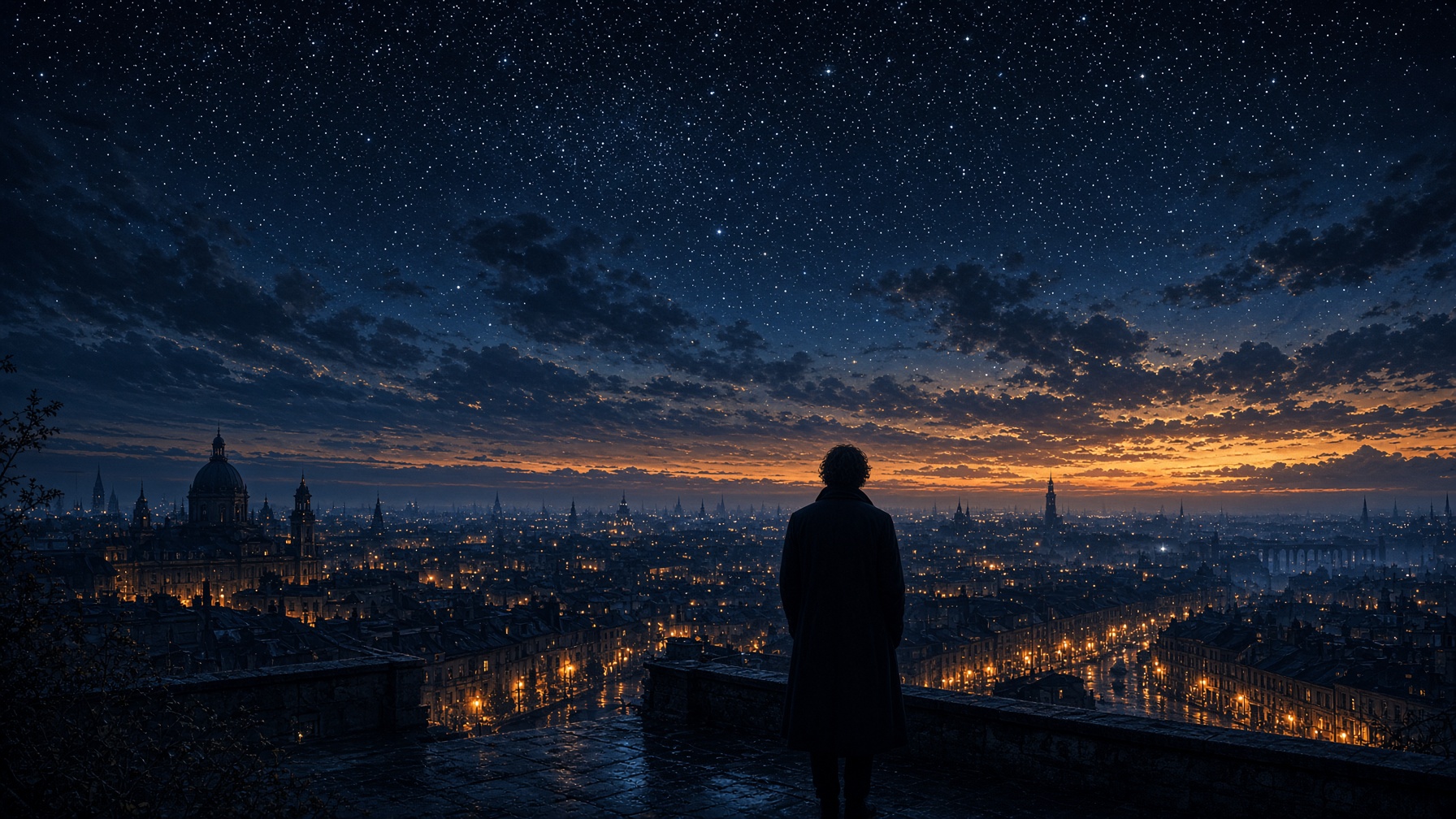
The screening
The picture is filed as The Night That Stayed.
Scenario
2:57 · 16:9
The clock on the wall passes the hour when morning should thin the window, and the glass stays black. The minute hand keeps its ordinary travel. The sky outside does not answer it. A man at the table turns a lamp down, expecting the room to be replaced by day. The dark does not give way. The bulb shrinks to a red point and still the window is night. He turns the lamp up again. The bulb is a small country. Outside, no bird begins, no cart answers the street. Night has simply remained. He sits with that fact while the clock takes another minute and the glass refuses it.
He sets a second cup on the table, an old hospitality, and then understands that no one is coming with the dawn to use it. The second cup is clean. He turns it once so the handle faces the door. No step arrives on the path. He puts the cup back in the cupboard. The gesture is plain, not tender for long. The shelf takes the cup among others that are also clean. He shuts the cupboard. The latch clicks and stays shut.
He opens the door to the yard. The air is cold and starless, the same full black as an hour ago, and the hour before that. Cold comes in across the sill and moves the edge of a paper on the table, then leaves the paper where it falls. A neighbor's window, usually lit at breakfast, stays a rectangle of nothing. He waits in the open door long enough for his breath to show and vanish. No light comes on in that rectangle. He shuts the door. The cold stays in the room after the door is shut, a second fact that follows the first: night did not leave, and now the kitchen holds a piece of it.
He sits. The lamp hums. He lays both hands around his own cup and does not empty it in a way that would finish a story. The tea, if it is tea, darkens nothing further. He only waits, and the waiting changes from a pause into the condition of the room. When he checks the clock, it has traveled into a morning the sky refuses. The minute hand passes a mark that should have been daylight and does not brighten the glass by doing so. The cupboard stays shut on the unused cup. The paper the cold moved lies a finger from where it was.
He turns the lamp down once more, not as a test he expects to pass, and the red point returns. The window does not thin around it. He turns the lamp up. The small country of the bulb is the same country. The clock takes the minutes a morning would take and spends them on black glass. His hands loosen on the cup and close again. The cupboard door does not open to restore the second cup to the table. No cart answers. No bird begins. The neighbor's rectangle stays a rectangle of nothing, and the cold that came in with the yard door lies along the floor and does not leave.
The second lamp on the sideboard stays unlit. The window holds the same black, and the cup cools between his hands.
Shooting script
Scene 1. Kitchen. Night. 2:57. 16:9.
One place. One hour. It stays one scene.
A man of fifty-five turns a kitchen lamp against a window that stays black past the hour of morning. He sets a second cup and puts it back. Cold from the yard door remains in the room, and his own cup cools in his hands.
No dialogue.
Breakdown
Night in the kitchen. Build the black window, the lamp, and the spare cup.
Cast. One man, fifty-five. No visitor arrives.
Clock and window. A wall clock whose minute hand keeps ordinary travel. Window glass that stays black through the marks that should have been daylight.
Lamp. A table lamp that dims to a red point and returns to a small bright country. A second lamp on the sideboard that stays unlit.
Cups and cupboard. His own cup, still in use. A second clean cup set with the handle toward the door, then returned to a shelf of other clean cups. A cupboard latch that clicks and stays shut.
Yard door and paper. A door onto cold, starless air. A paper on the table that the cold can shift by about a finger. A neighbor window across the way, a dark rectangle.
Shot list
Camera. One scene. 16:9.
Nobody looks into the lens. The sizes below are the decoupage, not the literary script.
1 · 0:00–0:13 · Wide. The wall clock travels while the kitchen window stays a sheet of black.
2 · 0:13–0:26 · Close. He dims the lamp to a red point, and the glass is still night.
3 · 0:26–0:39 · Medium. He brings the lamp back up into a small bright country, with neither bird nor cart outside.
4 · 0:39–0:52 · Medium. He sets a second clean cup, handle toward the door, and the path stays empty.
5 · 0:52–1:05 · Close. The spare cup returns to a shelf of other clean cups, and the cupboard latch clicks shut.
6 · 1:05–1:17 · Wide. He opens the yard door on cold air with no stars, as black as the hour behind him.
7 · 1:17–1:29 · Close. Cold crosses the sill and nudges a paper, which stays in the new place.
8 · 1:29–1:41 · Medium. The neighbor window, usually lit for breakfast, stays a blank rectangle while his breath shows and fades.
9 · 1:41–1:53 · Medium. He shuts the door, and the cold remains indoors with him.
10 · 1:53–2:05 · Medium. He sits with the lamp humming and both palms wrapped on his own cup, the drink left unfinished.
11 · 2:05–2:18 · Close. The clock has entered a morning the sky refuses, and a daylight mark goes by while the glass stays black.
12 · 2:18–2:31 · Macro. The nudged paper rests a finger-width off its first place.
13 · 2:31–2:44 · Close. He dims the lamp until the red point is back, brings it up again, and the bulb's little country is unchanged.
14 · 2:44–2:57 · Wide. The sideboard lamp stays dark, his hands loosen and close on a cooling cup, and yard-cold lies along the floor.
Lookbook
Lamp against a black window.
The window is a black source of nothing, refusing the clock. The lamp is the only working light: a red point when he dims it, a small bright country when he brings it up. That bulb warms his cup and leaves the glass outside as black as it found it.
Palette
Black window. #101820. The glass that stays night.
Red point. #C23B2E. The bulb when the lamp is down.
Lamp country. #F0D59A. The bulb when the lamp is up.
His cup. #F6F0E4. The cup between his hands.
Cupboard. #6A5142. The shut wood around the spare cup.
Shifted paper. #E6DCC0. The sheet the cold moves.
Tea. #5A382C. The drink left in his cup.
Yard cold. #8AA0B4. The air lying along the floor.
Lens
Wide holds the kitchen, the black window, and the yard door. Close holds the man and the lamp. Macro holds the red point, the clock mark, and the shifted paper.
Costume
Night clothes for a man who waited for morning.
The man is fifty-five. The page gives no garment. Dress him in a dark wool shirt and trousers, sleeves loose enough for both hands on a cup.
The cloth keeps that dark wool. Cold from the yard touches the shirt and leaves it. No coat is added, and the spare cup never becomes a reason to dress for a guest.
Hair is short, greying, ordinary for fifty-five.
Design
A kitchen that keeps the night.
One kitchen at night. A wall clock, a black window, a table lamp, and a second lamp on the sideboard left dark. A cupboard of clean cups. A door to a yard.
The lamp must dim to a red point and return. The window must stay black. The door must let cold in that remains after the door shuts, enough to move a paper.
Two cups: the one he holds, and a spare he sets handle-toward-door and puts away. The neighbor window is a dark rectangle seen from the open door, not a second set.
Makeup and hair
Lamp warmth, then yard cold, on the skin.
He is fifty-five. Night skin, lamp warmth on the face when the bulb is up, a brief show of breath at the open door.
Both hands wrap his cup, loosen, and close again. The spare cup leaves his fingers clean.
Cold stays in the room and cools the hands around the cup. No injury. Hair short and greying.
Sound
No score. Lamp hum, a cupboard latch, the yard door.
Clock. A quiet ordinary tick. It keeps going across marks that should have been daylight. The window adds no answer.
Lamp. A hum when the bulb is up. The hum thins at the red point and returns with the light.
Cupboard. The spare cup set down, then put away. One latch click, and the door stays shut.
Yard door. The door opens on a wide cold quiet. No bird. No cart. It shuts, and the indoor hum returns with the cold still in the room.
Paper. A small paper shift when the cold crosses the sill, then silence.
Breath. One stretch of breath at the open door, visible more than loud, then gone.
Cup. Ceramic in his hands. No drinking sound. The sideboard lamp never clicks on.