What Remains After
Key art
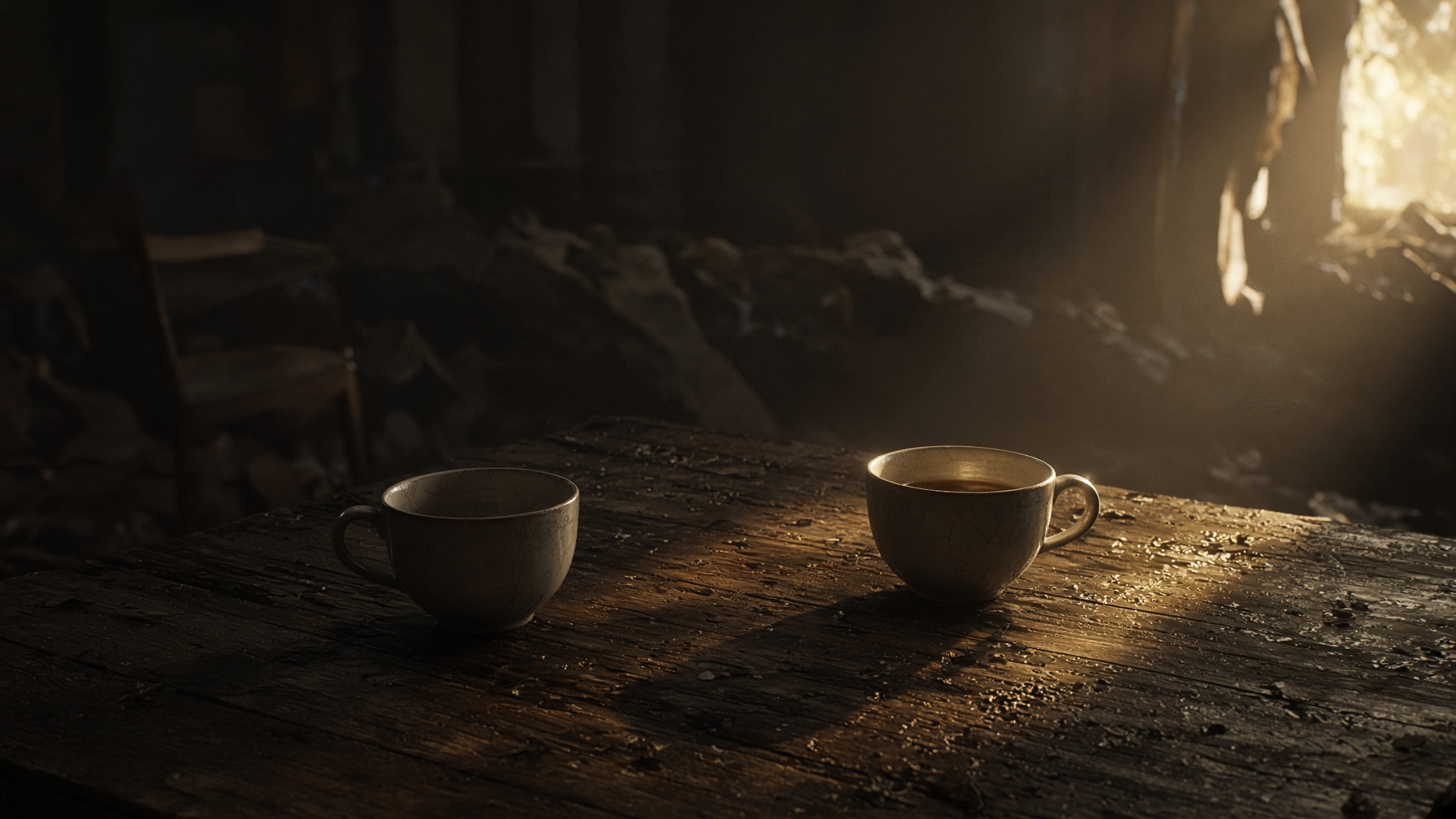
The screening
The picture is filed as What Remains After.
Scenario
2:57 · 16:9
Isolde March sits at a table with a stack of program notes for pieces that have already been played. She can end a paragraph. She writes the last sentence of one note, a clean stop, and sets the pen down. The stop is visible: the sentence ends, and the rest of the page is blank. Around her the life that used those notes has already ended: empty chairs in a shallow arc, a closed piano, a stand with no music on it. Dust sits at the edges of the chairs. She does not look for a new tenant in the silence, and she does not make a speech that would turn the remainder into wisdom.
She reads the paragraph once, hears that it is finished, and does not know what to do with a room that will not take a similar ending. Her hand goes to the window because that is the last available gesture. She opens it. The sash sticks and then gives. Air comes in, ordinary, a little cold, moving the page. The finished paragraph lifts, turns, and settles against the sill instead of flying out into a symbol. She lets it stay there. She does not chase it and does not pin it. A smaller breath lifts the page again and settles it lower, one corner over the sill's edge, still not leaving. That second settling follows the first and does not make an exit.
The piano remains closed. The chairs remain in their arc, slightly dusty at the edges. A little of the dust shifts when the air moves and then resettles in the same arc. Isolde keeps her place at the table with her hands quiet. The notes for things already played are still a stack. One page is at the window, and that is as much ending as the room receives. The pen stays where she set it down. The stand stays empty. The cold air continues and does not grow into a reason to close the sash.
The window stays open. The page rests against the sill, and the empty chairs do not rearrange themselves into an audience. The last sentence stays the last sentence, half on the sill, half held by a corner that will not fly. The stack on the table keeps the notes that were not taken by the air.
Isolde does not stand to retrieve the page and does not close the window to keep the rest of the stack from following it. The stack does not follow. Cold air moves the top sheet a finger's width and that is all. The closed piano gives back no sound when a board in the room ticks. The empty stand holds no music and does not fall. Dust on the chairs, resettled, marks the arc as clearly as the chairs do. Her hands stay quiet on the table beside the pen. The finished paragraph on the sill does not blow the rest of the way out and does not creep back to the stack. The room receives the open window and the one escaped page and refuses any larger ending than that.
Shooting script
Scene 1. Music room. Day. 2:57. 16:9.
One place. One hour. It stays one scene.
Isolde March, 61, finishes one program note, opens a sticking sash, and lets that page settle on the sill while the piano stays closed.
No dialogue.
Breakdown
Day hour for finished notes, a sticking sash, and a closed piano.
Cast. Isolde March, 61, alone at the table. Empty chairs are furniture, not an audience.
Program notes. Stack for pieces already played, one page with a finished last sentence and a blank remainder.
Pen. Pen set down after the stop and left there.
Window. Sash that sticks and then gives, cold ordinary air, page that lifts and settles on the sill with one corner over the edge.
Piano and stand. Closed piano that gives back no tone, empty music stand that stays upright.
Chairs. Empty chairs in a shallow arc, dust at the edges that shifts and resettles in the same arc.
Shot list
Camera. One scene. 16:9.
Nobody looks into the lens. The sizes below are the decoupage, not the literary script.
1 · 0:00–0:11 · Wide. Isolde sits in a room of empty chairs, a shut piano, and a stand with nothing on it.
2 · 0:11–0:23 · Medium. A stack of program notes for work already played waits on the table with her.
3 · 0:23–0:35 · Close. She completes one note with a clean final sentence and leaves the pen on the table.
4 · 0:35–0:47 · Medium. That sentence ends, and the rest of the sheet stays bare.
5 · 0:47–0:59 · Wide. Dust marks the rims of the chairs in their shallow arc.
6 · 0:59–1:11 · Medium. Her hand goes to the window, the last move the room still offers her.
7 · 1:11–1:23 · Close. The sash catches, then yields.
8 · 1:23–1:35 · Medium. Ordinary cold air enters and moves the finished page.
9 · 1:35–1:47 · Close. The paragraph lifts, turns, and comes to rest against the sill.
10 · 1:47–1:59 · Macro. A smaller breath of air lifts it again and leaves one corner over the sill edge.
11 · 1:59–2:11 · Wide. The piano remains shut, and the stand remains empty.
12 · 2:11–2:23 · Close. A little dust shifts in the draft and settles back along the same arc.
13 · 2:23–2:35 · Medium. Her hands rest still on the table next to the pen.
14 · 2:35–2:47 · Close. Cold air nudges the top sheet of the stack only a finger's width.
15 · 2:47–2:57 · Wide. The window stays open, one page on the sill, the other notes still in their stack.
Lookbook
Cold daylight from the sash
Day waits until the sash opens, then cold ordinary light comes in with the air. It lifts the finished page and lays it on the sill, half held, half over the edge. Dust on the chair rims shows when the air moves and then settles back. The closed piano stays a dark block outside the brightest of that draft.
Palette
Note paper. #F7F3EA. Finished paragraph on the sill
Blank remainder. #FBF9F4. Unwritten rest of that page
Piano black. #1A1C1B. Closed piano
Chair dust. #C8C2B4. Dust along the arc of chairs
Cold daylight. #E4EEF2. Air and light from the open sash
Pen. #2C3340. Pen left on the table
Sill wood. #A68462. Sill holding the settled page
Stand metal. #8A9094. Empty stand
Lens
A wide holds the arc of chairs, the closed piano, the empty stand, and Isolde at the table. A close holds the last sentence, the sticking sash, and the page on the sill. The open window is part of this room. Nothing outside is staged as a destination for the paper.
Costume
The same blouse in cold air
Isolde March is 61. She wears a muted blue blouse, sleeves quiet at the wrist. When the cold air comes in she adds no wrap and stays in the same cloth.
The change is only the cold on that blouse while she remains seated. Hands stay on the table after the sash is open. No concert black is put on. The room's performance clothes are already absent.
Design
Notes, sash, and a closed piano
The music room holds a table, a stack of program notes, a pen, empty chairs in a shallow arc with dust at the edges, a closed piano, and a stand with nothing on it. One page must end in a visible stop, the rest of that sheet blank.
The sash sticks, then gives. Cold air lifts the finished page to the sill, then a smaller breath sets one corner over the edge without taking the page out. Dust shifts and resettles in the same arc. The top of the remaining stack moves only a finger's width. The piano stays shut and silent. The stand stays upright and empty.
Makeup and hair
Quiet hands on the table
Isolde is 61. Hair grey and pinned simply, skin lined and calm, no stage powder. The face stays with the page and then with the window.
Hands write the last sentence, open the sticking sash, and then rest beside the pen. Nails plain. The cold air touches the skin of the hands and leaves no mark. Dust is on the chairs, not on her face.
Sound
No score. A sticking sash, moving paper, and a board tick.
Pen down. A small set of the pen after the last sentence, then quiet at the table.
Sticking sash. A catch, then a give, as the window opens.
Incoming air. Ordinary cold air, enough to move paper, never growing louder.
Page on the sill. Paper lifting, turning, and settling, then a smaller lift that ends lower.
Board tick. One tick from a board in the room, and the closed piano answers with nothing.
Dust. Too soft to carry, the air moving and the chairs staying in their arc.
Stack. The top sheet shifting a finger's width, then holding.